Highlights
- Will Reeves go in a Post-election reshuffle?
- Trump blames Biden for economic woes
- Little to cheer in Q1 GDP data
Get bank-beating rates — zero hidden fees
Join 10,000+ clients transferring salary, property deposits and business payments globally.


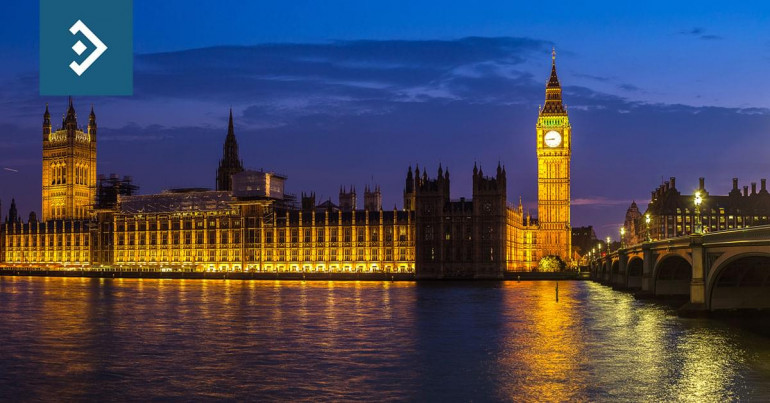
Starmer’s resolve is about to be tested
Even with a healthy majority, the question is “Can Labour hold off a surge in support for Reform?”
The Conservative Party is expected to continue to poll badly in this by-election and in the election of six mayors and 1,641 councillors across the country. Tory losses are barely worth mentioning anymore.
In one of the first mayoral seats to declare, Dame Andrea Jenkyns has won the Greater Lincolnshire mayoral election for Reform UK, Sir John Curtice has said.
The elections expert Curtice told the BBC that Jenkins’s margin in the first results is unassailable, Jenkyns has more than double the votes of her Conservative rival.
It is an oft-repeated fact that, apart from a theoretical “bloody nose”, the results of these elections will have little material effect on how the country is governed. Nigel Farage may move a step closer towards his dream of one day running the country, while Kemi Badenoch is unlikely to ever hold that mantle.
Sharp payroll job losses in March, coupled with all-time low consumer confidence, pose significant risks to the United Kingdom’s economy. Consumption comprises almost two-thirds of the UK’s GDP, and despite first quarter retail sales coming in strong, households are concerned about their employment opportunities, higher charges for utilities, energy, government fees and duties starting this month and a possible uptick in future prices due to rising trade tensions.
The introduction of the rise in employers’ National Insurance Contributions, as well as the rise in
The national living wage will have a significant impact on all businesses' hiring decisions.
The Chancellor, Rachel Reeves, could well be under pressure if the election results go as badly as are feared by Labour Headquarters. A lot will depend on how the Prime Minister views not just her performance in the role, but also the whiff of scandal that appears to follow her constantly.
Starmer accepts that to make an omelette one has to break eggs, but the idea that the economy has to go to move backwards before it can move significantly forward is wearing a little thin.
Reductions to welfare and social benefits designed to boost productivity and alleviate a challenging fiscal situation are weighing on sentiment. So are recent tax increases that were enacted against the backdrop of elevated budget deficits and a sizeable amount of sovereign debt. And while the Bank of England can help stimulate growth by reducing short-term rates, the heaviest long-term borrowing costs in decades will reduce the alleviation that monetary policy easing efforts typically provide.
April has been a struggle for the UK, with the country’s PMI Composite Index falling from 51.5 in the preceding month to 48.2. Not only did the result drop below the contraction-expansion level of 50.
It was also the lowest score in 29 months. The Services PMI Business Activity Index sank from 52.5 to 48.9, a 27-month low, while the Manufacturing PMI fell from 45.3 to 44, the weakest result in 20 months.
The pound began the new month at 1.3341 and looked quite strong, but it gradually lost ground to close at 1.3267.

Jobless claims leapt in the latest reporting period
Jerome Powell does not appear to be a man who is driven by his emotions. If he were, there would be a real possibility that he would be tempted to “thumb his nose” at President Trump and leave rates unchanged just to be “hornery”.
President Trump is calling for calm after new data revealed that the US economy contracted in the first quarter of 2025. While assuring Americans of a recovery, Trump blamed Joe Biden, describing the downturn as "inherited damage" from the prior administration. Trump evoked thoughts of Keir Starmer, blaming his predecessor for poor economic results.
American consumers are not yet seeing much evidence of the drastic changes President Trump has made on trade. But they are on their way. Even the most ardent supporters of Make America Great Again are becoming concerned about what to expect from the measures that are in the pipeline.
Trump has blurred the line between politics and the economy by taking more than a passing interest in all aspects of the economy.
McDonald’s regulars are reducing their fast-food trips, fuelling concerns about an economic malaise fanning across American consumers. The burger giant posted a 3% drop in revenue in the first quarter. Same-store sales in the U.S. dropped 3.6% from the prior year, the steepest decline since 2020.
The broader fast-food sector is in a rough patch, McDonald’s Chief Executive Chris Kempczinski told investors on a Thursday conference call. Restaurant visits have declined in the first quarter more than industry executives were anticipating in many large markets, including the U.S., he said.
Low-income consumers particularly pulled back on their spending, but so did middle-income households, Kempczinski said. Higher-income consumers maintained their visits, illustrating the “divided U.S. economy,” he said.
It is hard to imagine McDonald’s becoming a bellwether for the U.S. economy, but in the current environment, anything is possible.
The bond market is sending a signal that the Federal Reserve should be cutting interest rates, U.S. Treasury Secretary Scott Bessent said on Thursday, noting that yields on 2-year Treasury notes were lower than the central bank's policy rate.
"We are seeing that two-year rates are now below fed funds rates, so that's a market signal that they think the Fed should be cutting," Bessent said in an interview on Fox Business Network.
Maybe it's not the market that is signalling a rate cut, but Bessent’s interpretation of what it means.
Traders cleaned up existing positions yesterday in anticipation of today’s data release. The dollar index reached a high of 100.35 in its first foray above 100 since the “Liberation Day" turmoil. It could not hang on to that level and slid back to close at 99.88.
Q1 growth data was fairly meaningless in the face of tariffs
However, economists cautioned that the recovery may be short-lived, as US tariffs are expected to negatively impact growth later this year. “This should not be interpreted as the beginning of a sustainable recovery,” said Dirk Schumacher, chief economist at KfW.
Inflation eased slightly to 2.1% in April, while unemployment rose as companies announced job cuts amid the slowdown. Despite a modest recovery expected after two years of contraction, the government recently downgraded its growth forecast for 2025 to zero due to US tariffs.
As much as any positive growth number coming out of Germany is highly appreciated these days, the quarterly increase is still far too small to end the country's long-lasting stagnation.
Economists were slightly blind sided by the positive reaction to the creation of the country’s five-hundred-billion-euro growth fund, but as the reality hit that the benefit won't be seen physically until mid-2026, the positivity faded.
German GDP had contracted in the final quarter of last year by 0.2%, reigniting fears of recession, defined as two consecutive quarters of contraction. ECB policymakers are becoming increasingly confident about cutting interest rates in June as inflation continues to track lower. The ECB trimmed its benchmark rate to 2.25% this month.
However, German core inflation, which excludes volatile food and energy prices, rose to 2.9% in April from 2.6% in the previous month.
Germany is the only member of the G7 that has failed to grow for the last two years, and tariffs announced by the US, its main trading partner, could put it on track for a third year of contraction for the first time.
The IFO Institute fears that the German economy will contract again as early as the summer, due to tariff fears, goods purchases in the US were brought forward, benefiting exports and industrial production in Germany in the first quarter.
Separate data from the labour office showed today that the number of people out of work in Germany rose less than expected in April, but the unemployment rate rose to its highest level since the pandemic. It appears that no sector of the Eurozone’s largest economy won't be hit by the introduction of tariffs. That makes Brussels and Frankfurt’s lack of action in negotiating a response all the more surprising.
Next week will see the release of retail sales data for April. It will be interesting to note if Eurozone consumers' threat to avoid buying American goods has gained any early traction.
The euro is currently unable to make any headway versus the dollar, which is showing signs of recovery. It traded in a narrow range yesterday between 1.1338 and 1.1268, closing at 1.1281.
Have a great day!

Exchange rate movements:
01 May - 02 May 2025
Click on a currency pair to set up a rate alert
Alan Hill
Alan has been involved in the FX market for more than 25 years and brings a wealth of experience to his content. His knowledge has been gained while trading through some of the most volatile periods of recent history. His commentary relies on an understanding of past events and how they will affect future market performance.