Highlights
- Reeves performs a U-turn, but is she sweetening the pill?
- “Maganomics” is wrecking the economy
- The French economy is in meltdown
Get bank-beating rates — zero hidden fees
Join 10,000+ clients transferring salary, property deposits and business payments globally.


Reform UK challenges Bailey over interest payments
Pensioners with a total income of less than thirty-five thousand pounds will now receive the supplement. This will cost the Treasury £1.25 billion.
The announcement of the U-turn just 48 hours before Reeves publishes her spending review has caused concern that she will “give with one hand while taking away with the other”
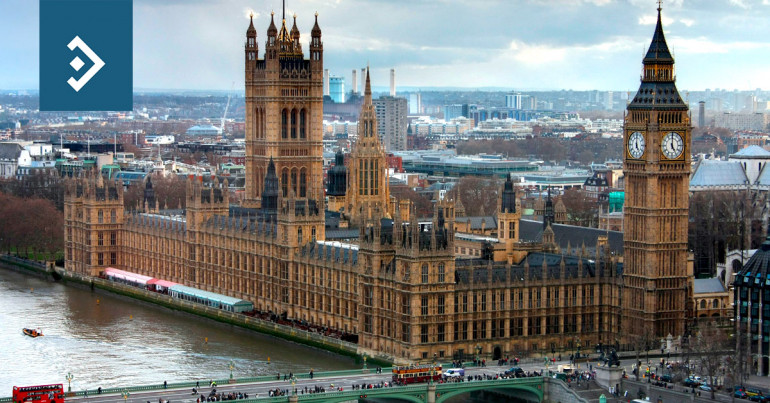
The Mayor of London, Sadiq Khan, is understood to be furious at the Chancellor over a lack of funding for London in the forthcoming spending review, with sources close to the mayor suggesting the capital will get none of its key transport requests.
The mayor is also understood to share the concerns of senior Metropolitan Police officers that London will not receive a substantial funding uplift.
The Met police commissioner, Sir Mark Rowley, has already written to the chancellor warning about the effects on tackling crime if there is no serious increase in policing budgets.
A city hall source said it would be “unacceptable if there are no major infrastructure projects for London announced in the spending review and the Met doesn’t get the funding it needs”.
Khan is also understood to have asked for powers to introduce a tourist levy in London, which has been rebuffed, though such changes would be likely to take effect at a budget rather than spending review.
The mayor, who has rarely criticised the Labour government, had asked for two key transport investments: an extension of the Docklands Light Railway to Thamesmead, and to complete the extension of the Bakerloo line. Transport for London’s day-to-day costs are met by fares.
It is felt that the level of support that London receives should enable it to contribute more to the welfare of the entire country.
The NATO boss today warned that Britons should start learning Russian if the UK doesn't ramp up defence spending.
Mark Rutte issued the chilling message while in London for talks with PM Sir Keir Starmer, ahead of a NATO summit later this month.
NATO allies are expected to be asked at the gathering to agree on a commitment to allocate 3.5 per cent of GDP to core defence spending by the 2030s.
A further 1.5 per cent of GDP would be required for 'defence-related expenditure' under Mr Rutte's plan to strengthen the alliance.
It follows pressure from the US President on European members of NATO to hike their military budgets.
Any such increase would be difficult for the Government to commit to, given the parlous state of the country’s public finances.
In a letter to the Bank of England Governor, Andrew Bailey, Reform UK’s Deputy Leader has criticised the Bank for a “systemic misuse of taxpayers’ money”.
Reform now claims it could save the country an eye-watering £35 billion a year by getting rid of interest on central bank reserves, which is part of the BoE’s QE programme, created to boost the economy. Reform would use the money saved from cutting the scheme to pay for the increase in the tax-free personal allowance to £20,000.
The markets were fairly calm yesterday, which saw Sterling rally to a high of 1.3564 but then return to close close to its opening level of 1.3531.

Set up a bookable rate alert
Automatically execute a currency purchase when your desired rate is reached
Trump is stomping through the U.S. economy
Hardened by years of trial proceedings, Powell is happy to accept that President Trump may well remove him from his post early due to his lack of support for interest rate cuts to support the President’s economic agenda.
Powell prefers to let his colleagues on the FOMC do the talking in support of the Fed's policy decisions, to concentrate on steering the Central Bank towards fulfilment of its dual mandate of creating economic growth while ensuring that inflation remains under control.
Trump sees the fall in inflation from a high of close to double figures as an opportunity to follow the ECB and cut rates significantly. What Trump fails, or chooses, not to see is that the Eurozone economy was close to falling into a severe recession before the ECB acted.
If Powell does lose his job, it is likely that once he is relieved of the burden of leadership, he will be in a position to provide the markets with a personally based summation of the Fed’s performance.
The reaction of the Administration to the protests held in Los Angeles over the weekend has been typically over the top, with the President preferring to use a show of force rather than listening to Californians’ grievances.
The attack on democracy and the rule of law, which amounts to the transformation of the land of the free into a nation where masked government agents kidnap people on the streets and opposition to the Leader is criminalised, was completely predictable.
It was obvious that Donald Trump would pursue some bad economic policies, but few expected them to create a full-blown crisis in a matter of months, while his attack on former supporter, Elon Musk, who is far from innocent in the growing chaos, has been nothing short of the stuff of tabloid trash talking.
The chaos in Los Angeles and the treatment of the Fed Chairman are simply the tip of the iceberg of what is likely to follow over the next three and a half years.
Trump’s populist MAGA rhetoric appeals to the worst of his supporters, although underlying his policies, there is the continuing support from Wall Street for his continued attacks on the wider responsibilities of the Fed, in particular regarding regulation.
Michelle Bowman is a veteran of the Federal Reserve. But the ink on her newest role, the Fed’s vice chair for supervision, is still drying. Following her confirmation, she spoke last week at Georgetown University in her first appearance as the central bank’s top cop.
She believes that banking is not and cannot be devoid of risk, and to drive out such risk “is at odds with the fundamental nature of the business of banking,” Bowman said. “Banks must be able to earn a profit and grow while also managing their risks.”
“Our goal should not be to prevent banks from failing or even eliminate the risk that they will,” Bowman said. “Our goal should be to make banks safe to fail, meaning that they can be allowed to fail without threatening to destabilise the rest of the banking system.”
The May report on inflation is due to be published tomorrow, with the headline number expected to rise from 2.3% to 2.5% while the core may see its return to 3%. This will further deter the Fed from taking any further action on monetary policy before the end of the summer.
The dollar index attempted to rally above resistance at 99.20 yesterday but ran into strong selling interest, which eased it back to close at 99.10.
France must increase its retirement age
An ECB Governing Board Member has warned that any wholesale loosening of the Central Bank’s regulatory requirements could see banks require more safeguards and guarantees from their customers.
Frank Elderson believes that Europe’s drive to simplify and streamline financial regulation is making top supervisors nervous about the risk of key safeguards being watered down.
Two of the EU’s most senior financial supervisors told the Financial Times they were determined to avoid crisis prevention measures being swept away in the push to revive the region’s sluggish economic growth.
“If it is about deregulating and lowering the bar on financial protections, we will not be ready to tackle volatility.’’ Dominique Laboureix, head of the Single Resolution Board, which handles failing Eurozone banks, said. ‘‘That means crises, which means less growth.”
The pointed intervention, which is uncommon for the watchdogs, comes after the European Commission recently announced plans to drastically cut the scope of business sustainability disclosure rules it introduced two years ago. It is also reviewing capital rules for banks and insurers as part of plans to boost financial market activity and growth.
The cost of Europe’s most expensive retirement scheme is weighing down the French economy to such an extent that the country could be bankrupt within twenty years, economists believe.
Successive Presidents have paid lip service to the issue but have “kicked the can into the long grass”, believing tackling the problem would be tantamount to political suicide.
Analysis by France's Council on Retirement Policy said that the structure will become unviable by 2045 if the retirement age is not increased to 66. It comes after France's President, Emmanuel Macron, sparked fury two years ago after raising it to 64. Now, he has been told that he faces a "social explosion" if another increase were enforced.
Germany could face two more years of recession if a trade war with the United States escalates sharply, the central bank said on Friday.
If US Trump's tariffs were to be implemented in full from July and the EU were to retaliate, then German output would decline 0.5% this year and 0.2% in 2026, the Bundesbank forecasts.
This would be due to a "marked decline in exports and significant uncertainty weighing on investment," it said.
There would be a return to growth in 2027, with a rebound of 1%, it said.
The eurozone's traditional growth engine has contracted for the past two years due to a manufacturing slump and surging energy prices following Russia's invasion of Ukraine, but hopes had been high for a modest recovery this year.
ECB President Christine Lagarde remarked over the weekend that there is still a long way to go until inflation is squeezed out of the economy. It will not be an entirely smooth ride. We still need to have our foot on the brake for a while, even if we are not pressing down as hard as before. Interest rates will therefore have to remain restrictive for as long as necessary to ensure price stability on a lasting basis.
The euro had a quiet day yesterday, trading between 1.1392 and 1.1416, before closing close to its high.
Have a great day!

Exchange rate movements:
09 Jun - 10 Jun 2025
Click on a currency pair to set up a rate alert
Alan Hill
Alan has been involved in the FX market for more than 25 years and brings a wealth of experience to his content. His knowledge has been gained while trading through some of the most volatile periods of recent history. His commentary relies on an understanding of past events and how they will affect future market performance.