Highlights
- The market awaits the June and Q2 growth numbers
- U.S. inflation data for July may shake the Fed
- Eurozone investor morale returns to positive in August
Get bank-beating rates — zero hidden fees
Join 10,000+ clients transferring salary, property deposits and business payments globally.


The TUC calls for a robust review of the OBR, citing fears that it holds back economic growth
Monthly growth figures are expected to show the economy remained resilient in June, with retail sales unexpectedly strong due to World Cup-related spending and continuing hot weather. However, more than 75% of the country was declared to be in drought yesterday. This will be a factor in the country’s food security for the rest of the year, and possibly into next year.
Sterling traders were also watching talks in the Middle East to reopen the Strait of Hormuz and any potential impact on energy prices.
Oil prices rose slightly on Monday amid continued uncertainty over the strait’s reopening. Iran said it was nearing a deal with Oman to define new shipping lanes, but that the U.S. must meet other conditions.
There will be no let-up in Andy Burnham’s busy schedule as he returns from a brief holiday and is about to embark on a countrywide ‘tour’ to explain how he wants to see improved growth in every postcode. He clearly believes in the devolution programme that served him well as Mayor of Manchester.
Meanwhile, the TUC is urging the Chancellor, John Healey, to order a “root and branch” review of the Office for Budget Responsibility, claiming the forecaster’s approach holds back investment.
The union umbrella body is calling on Healey to use his first budget on 28 October to re-examine the watchdog’s assessments.
In particular, it accuses the OBR of downplaying the benefits of public investment by assuming it “crowds out” private capital, an approach disputed by some economists.
Paul Nowak, the TUC’s general secretary, said: “For too long, the OBR has been a millstone preventing good growth across the country. The world has moved on from the self-defeating logic of austerity, but the OBR models still bake in its false assumptions. Only a root and branch review can bring the OBR into the modern economic mainstream.”
The TUC’s critique echoes calls for a restructuring of the independent forecaster from a range of think tanks and campaign groups, including Progress on the right of the Labour party and the left-wing New Economics Foundation.
Louisa Dollimore, of the Good Growth Foundation think tank, previously called the body “a backseat driver with out-of-date maps” that “obstructs long-term planning and investment at a moment when Britain needs both”.
It will be interesting to see just how much notice Burnham and Healey take of the TUC since its role has been downplayed over recent years.

Use our currency tracker tool
Let us be your eyes and ears in the currency exchange market
The ‘other Kevin’ outlines preference for Fed rate cuts, adding to pressure on Warsh
Official figures on Friday showed a surprise fall in the number of jobs created in the economy and slowing wage growth in July. But the unemployment rate fell to 4.1%, the lowest in over a year, continuing its downward drift from November's recent peak of 4.5%.
An unemployment rate of 4.1% is, by any measure, indicative of an economy at, or close to, full employment. Moreover, it is now slipping below what many observers, including Federal Reserve officials, consider the long-term "natural" rate of unemployment, which neither fuels nor cools inflation. This theoretical number is sometimes referred to as the non-accelerating inflation rate of unemployment. Former Fed Chair Alan Greenspan always considered any unemployment rate below 5% to be full employment.
The median estimate of the long-run unemployment rate in the Fed's quarterly Summary of Economic Projections has been 4.2% for the past two years. The unemployment rate is now back below that long-run projection for the first time in over a year.
National Economic Council head Kevin Hassett was interviewed in the U.S. about the Federal Reserve’s credibility under Donald Trump amid Trump's efforts to remove Fed governor Lisa Cook.
Hassett was believed to be among the other candidates in the running to replace Jerome Powell before Trump chose Warsh.
Last week, the White House sent Cook a letter notifying her that “the President is considering removing you from your position on the Board of Governors of the Federal Reserve due to there being sufficient reason to believe that you made a false statement on one or more mortgage agreements.”
Hassett was asked about the White House's potential effort to remove Cook and how he views the Fed's independence in this context, given Powell's approach and the way Kevin Warsh may approach it.
Following a weaker-than-expected July jobs report, tomorrow’s U.S. Bureau of Labour Statistics Consumer Price Index report will heavily influence the Federal Reserve's next interest-rate decision. Economists expect headline annual inflation to ease slightly to 3.4%, though sticky underlying price pressures and shifting energy costs keep a September rate hike under active debate.
The headline rate of inflation has been above the Fed’s target of 2% for 62 consecutive months. The markets appear to accept this, although the Central Bank obviously considers other factors to maintain its mandate for price stability.
The dollar’s performance yesterday was a controlled rebound, not a trend reversal. Markets are awaiting this week’s data to determine whether Friday’s payroll shock marks the start of a sustained USD downtrend or merely a temporary wobble.
The drought on the Rhine threatens freight transport and the German economy
Rather than using dollars to bail out Tokyo so it wouldn’t cash in its US bonds, the US used Euros instead.
Selling Euros let Washington thwart a Japanese bond sell-off without the risk of further inflation that would have come with selling dollars. Most alarming, they did not inform the European Central Bank before doing so, according to a new Financial Times report.
It is the first time in history that the US has sold a European-allied currency without first informing its Central Bank, leaving European financial officials shell-shocked. “This has never happened before,” one EU source involved in the discussions (or lack thereof) told the FT, bemoaning a situation where “decades of close co-operation between Western Central Banks that fostered financial stability and economic growth may have come under threat.”
The move confirms the alacrity with which Trump believes he can treat his country’s partners to achieve his desired result. This is the very essence of his MAGA stance.
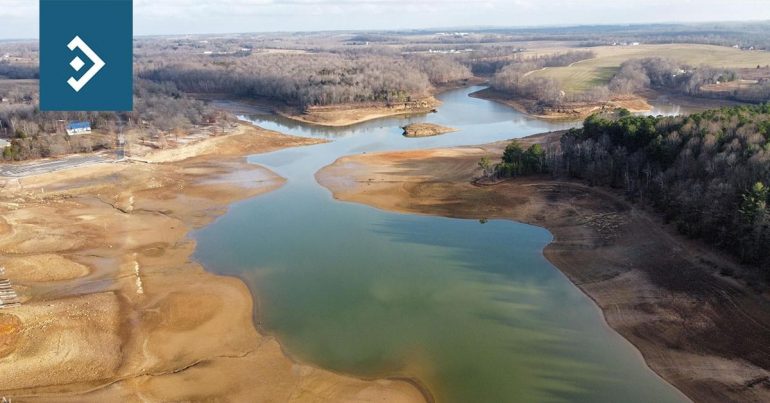
Drought conditions across almost the entire mainland of Europe have triggered wildfires that have devastated large swathes of woods and grassland, mostly in Spain and France. It was reported recently that water levels on the Rhine, one of Germany’s major transport routes, were approaching crisis levels.
A report published yesterday confirmed this. After several weeks of drought, water levels on the Rhine have dropped to critical levels, hampering cargo shipping and potentially affecting the German economy. In the shallow stretch near Kaub, between Mainz and Koblenz, the water level was about 16cm at noon yesterday, according to Deutsche Welle, citing Germany’s Federal Waterways and Shipping Authority.
The actual navigable channel at this location is about one metre deeper, but 40cm is considered the minimum depth for standard commercial vessels. Based on readings at Kaub, operators determine how much cargo barges can safely carry and whether passage is possible. According to local media, in recent weeks carriers have, in many cases, reduced vessel loads to one-fifth of their usual capacity. Historically low water levels are also being recorded near Cologne, Düsseldorf, Duisburg-Ruhrort, and Emmerich.
Jens Schwannen, President of the BDB inland waterway shipping association, told the Rheinische Post that the Rhine near Kaub could become impassable by the end of the week. If that happens, the river will effectively be divided into two sections for commercial traffic.
Inland waterways carry about 5% of Germany’s cargo, including iron ore, coal, sand, and petroleum products. A major disruption like this would have a significant effect on the country’s economy.
The euro had a quiet, slightly softer session, holding most of Friday’s gains but lacking momentum. Markets are now awaiting tomorrow’s U.S. CPI, which will likely determine whether EUR/USD continues to drift or breaks out of its current range.
Have a great day!

Exchange rate movements:
10 Aug - 11 Aug 2026
Click on a currency pair to set up a rate alert
Alan Hill
Alan has been involved in the FX market for more than 25 years and brings a wealth of experience to his content. His knowledge has been gained while trading through some of the most volatile periods of recent history. His commentary relies on an understanding of past events and how they will affect future market performance.