Highlights
- Bank of England acts to lift pressure on bond yields
- Manufacturing expands according to Philadelphia Fed survey
- Croatia’s Zigman warns growth is at risk if inflation isn’t tackled
Get bank-beating rates — zero hidden fees
Join 10,000+ clients transferring salary, property deposits and business payments globally.


Healey must cut spending to rescue economy, warns Next boss
The widely expected decision followed a regular monetary policy meeting, after the Federal Reserve raised its benchmark interest rate for the first time since 2023, citing the need to combat surging inflation. “So far higher energy costs have had a limited effect on price and wage setting in the UK,” Bank of England Governor Andrew Bailey said.
“But the longer this volatility persists, the bigger the impact it will have on inflation, and the more likely it is we will need to raise the base rate,” he added.
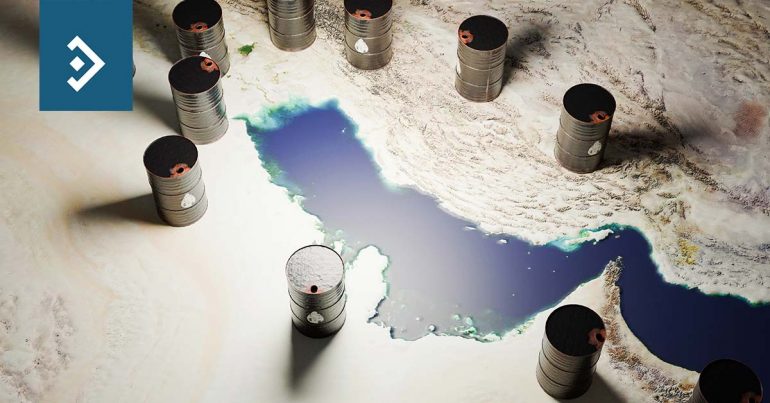
Surging energy prices triggered by the war in the Middle East have led Central Banks around the world to shift in favour of tightening monetary policy. The Bank of Japan has raised borrowing costs this morning as it also battles inflation, while the European Central Bank last week lifted interest rates for the second time this year.
Three members of the BoE’s monetary policy committee, Pill, Greene and Mann, voted to increase the UK rate by 0.25 percentage points, to 4%. So Bailey joined the five remaining members in calling for no change for a sixth straight meeting, the minutes showed. The vote came after UK inflation climbed to 3.1% in August, far above the Bank’s 2% target. The MPC expects price pressures to rise further, projecting inflation to reach 4% by the first quarter of 2027. Bailey doesn't favour preemptive rate changes and prefers to let the situation play out naturally.
“If the conflict in the Middle East persists for an extended period, as appears to be the case, and the risk of second-round effects emerging increases, it is likely that policy may have to be tightened,” Bailey commented to the media. Concerns about inflation have sent global government bond yields surging to multi-decade highs in recent weeks.
Prime Minister Andy Burnham said earlier this week that he was ready to take “difficult decisions” on the economy as the ‘budget day’ looms. Burnham and his Chancellor, John Healey, face pressure to deliver on their promise to ease the cost of living for households while maintaining strict fiscal discipline.
As a hike in November becomes more likely, with another in February to follow, the Bank decided to change how it manages its balance sheet. The Bank has been selling off the government bonds it bought after the financial crisis through quantitative easing, or QE. It’s still sitting on £488 billion (down from £895 billion at the peak).
The Bank can continue with QT passively by letting bonds mature and simply not buying new ones to replace them. That reduces the pile without doing anything. But relative to other Central Banks, the Bank has too many gilts with maturity dates far out in the future to rely solely on that. So it’s been selling them.
Unfortunately, selling the gilts now that interest rates have risen means taking a loss. Not only that, but the further out the gilt's maturity date, the further the price has fallen and the bigger the loss. Taxpayers ultimately pay this loss, so active QT has been increasingly controversial, not least given the precarious state of the UK gilt market.
Lord Wolfson, Next’s chief executive, has urged Chancellor John Healey to cut spending at next month’s Budget, warning, “you can’t spend your way out of a funding crisis”.
The retail magnate has urged the government to clamp down on spending, avoid further tax hikes and slash planning red tape to boost economic growth.
He told the media: “The only things that will really change the long-term trajectory of the economy are the government getting its spending under control and boosting supply-side measures.”
Wolfson, who has led Next for 25 years, added: “You can’t spend your way out of a funding crisis.”
As the October Budget approaches, retail bosses have ramped up pressure on the government to reform business rates and cut employment costs.
Sterling was stable yesterday as the ‘hold’ from the Bank of England was priced into traders’ positions, with only marginal shifts across major FX pairs. The pound neither strengthened nor weakened meaningfully, reflecting a calm session and continued consolidation after earlier moves this month.

Trump says EU allowing Canada as associate member could be a ‘hostile act’
The quarter-point increase lifts the Fed’s key rate to about 3.9% and, over time, could lead to higher borrowing costs for mortgages, auto loans and credit cards. In a set of quarterly projections, the Fed also signalled that its rate-setting committee could raise it a second time to 4.1%.
The move comes as Americans already struggle with high costs for groceries, fuel and housing. Affordability has taken centre stage in the upcoming midterm elections, just seven weeks away.
It adds another potentially dicey economic variable for Republicans and President Donald Trump, who blasted the decision on Wednesday and accused the Fed's top policymakers of trying to hurt him politically.
Chair Kevin Warsh, who Trump nominated, emphasised after the announcement that the economy has shown signs of gathering speed since the Central Bank decided to keep rates unchanged in late July.
Inflation has remained stubbornly above the Fed's 2% target, and he noted there is little sign it is cooling.
“The plain fact is that inflation is too high and has been for too long,” Warsh said. “We must be confident that underlying inflation is moving to our objective clearly and at sufficient speed. Today the FOMC decided that this standard has not been satisfied,” he added.
Trump, speaking to reporters in North Carolina ahead of a midterm campaign rally, made no mention of his policies that influenced the decision, instead framing the historically independent Fed as another political actor in Washington.
“The board is very hostile. They’re very political. They’re doing the wrong thing. They’re a bunch of politicians,” he said, adding, “They’re raising rates to make me look as bad as possible.”
Trump went on to talk about the controversial possibility that Canada may join the European Union as an ‘Associate member’
U.S. President Donald Trump says he considers Canada's relationship with the EU 'laughable,' and threatens steeper tariffs against Canada and Europe. “If they do that, if I think it’s at all a hostile act, I will put very serious tariffs or stop trading with Europe on many things,” Trump told reporters en route to the event in North Carolina.
EU Chief Ursula von der Leyen proposed earlier this week during her annual State of the Union speech, which Canadian Prime Minister Mark Carney attended, as she sought to deepen ties among allies in what she called “an openly hostile world.”
The Philadelphia Federal Reserve Manufacturing Index, a key indicator of regional business conditions, read 37.8 last month. This figure exceeds the forecast of 31.3, indicating stronger-than-expected performance. However, it marks a decline from the previous reading of 47.4, suggesting that while conditions remain positive, growth has slowed noticeably.
Based on a survey of about 250 manufacturers in the Philadelphia Federal Reserve district, the index serves as a barometer of the manufacturing sector’s health nationally. A reading above zero signals improving business conditions, while a figure below zero indicates a contraction.
With the current reading at 37.8, the index continues to reflect expansion, albeit at a slower pace than the previous month.
The USD softened modestly yesterday, giving back some of the sharp Fed-driven gains from the previous day. Overall, FX markets pulled back slightly, supported by easing Treasury yields and lower oil prices.
ECB’s Rehn sees no second-round inflation, backs joint debt for defence
“There’s a lot of optimism for growth,” he said in his first interview with international media since taking office in June. “We really need to care about inflation, which can also jeopardise growth in the end.”
However, the Governor of the Finnish Central Bank, Olli Rehn, said there were no clear signs of second-round inflation effects in the Eurozone and backed jointly issued debt to strengthen the region's defence capabilities.
Speaking at an event in London, Rehn said the same tightness was not evident in the Eurozone's labour market as in 2022, after the invasion of Ukraine and the post-COVID crisis. However, the central bank was watching that and other data closely.
He also said it was closely monitoring the "political scenery" in Europe ahead of elections in countries like France next year, stressing the Bank had a toolbox of "viable instruments" to ensure smooth transmission of monetary policy.
France's Prime Minister has promised that the government will reduce the country's deficit next year by cutting public spending by €54 billion in 2027. But Sébastien Lecornu insisted his plans did not amount to austerity, as high fuel prices have sparked renewed social tensions just months before the presidential election.
In an interview with the Le Figaro business newspaper, he said the cuts will bring the public deficit down to 4.8% of gross domestic product excluding defence spending, and 5% including military spending.
The figure for military spending will concern other NATO members, as its General Secretary, in London, told reporters that NATO must honour its promise to increase defence spending to counter the renewed threat posed by Russia.
The euro strengthened modestly yesterday, posting small gains against the US dollar and the pound while remaining broadly stable against most other major currencies. The day’s moves were incremental rather than directional, but the common currency traded with a mild bid tone.
Have a great day!

Exchange rate movements:
17 Sep - 18 Sep 2026
Click on a currency pair to set up a rate alert
Alan Hill
Alan has been involved in the FX market for more than 25 years and brings a wealth of experience to his content. His knowledge has been gained while trading through some of the most volatile periods of recent history. His commentary relies on an understanding of past events and how they will affect future market performance.