Highlights
- The UK digital economy sectors adapt strategies for sustained growth
- Tariffs are dealing a death blow to small businesses
- Eurozone Retail Sales Decline Unexpectedly
Get bank-beating rates — zero hidden fees
Join 10,000+ clients transferring salary, property deposits and business payments globally.


Unemployment to jump to 5.3% as UK economy faces slower growth, says OBR
The National Institute of Economic and Social Research warned borrowing costs could be driven higher as war in the Middle East pushes up the price of oil and gas.
That would be a bruising setback for millions of families pinning their hopes on cheaper mortgages.
The Bank has cut rates six times since August 2024, bringing them down from 5.25% to 3.75%, and it was hoped that further rate cuts would happen this spring.
But the chances of such a move have been severely dented by surging energy prices, as the US-Israel war with Iran spreads through the region.
The Spring Statement has been demoted to a non-event, the aim being to provide a stable environment for businesses, or at least the semblance of one, and to remove the element of financial mayhem and panic around this previously key financial occasion.
But quietening speculation around the state of the UK’s finances and what may be coming down the line isn’t necessarily easy to achieve, especially with the OBR’s review taking place in a highly eventful week, and following a troubling by-election defeat for the government.
Rachel Reeves used the Spring Statement to repeatedly insist she has the right economic plan for the country, a claim that remains to be proved. It is unclear whether her plan can withstand the economic ripple effects of the conflict in Iran, Trump’s latest tariffs, and political pressure on the government to abandon fiscal caution.
All three developments have the capacity to shape the direction of markets, inflation, and government spending.
It may well be that if the elections that are due to happen in early May turn out as badly for Labour as polls suggest, the Prime Minister could force Rachel Reeves to abandon her fiscal strategy or face the sack.
Even if these risks fail to materialise, the picture painted by the OBR is far from encouraging. Growth has been downgraded from 1.4% in 2025 to 1.1% this year, albeit with a 0.1% rise pencilled in for the remaining years of the decade.
Inflation is falling because wage growth has halved.
The United Kingdom’s digital economy is undergoing a significant transformation as businesses adapt to technological advancements and shifting consumer expectations.
From financial services to digital entertainment, companies are moving beyond initial disruption phases to establish sustainable, long-term operational models. This is particularly obvious in how firms are leveraging data to personalise user experiences while adhering to changing regulatory frameworks.
Market leaders are no longer solely focused on aggressive customer acquisition but are instead prioritising lifetime value and platform stability. This strategic change comes as the digital marketplace matures, requiring businesses to show resilience against global economic volatility.
By integrating advanced technologies such as artificial intelligence and blockchain, UK enterprises are securing their positions as innovators while addressing the specific needs of an increasingly tech-savvy population.
The pound resumed its decline yesterday as traders were increasingly influenced by the news emanating from the Middle East overnight, only for it to recover as the day wore on. Yesterday, Sterling fell to a low of 1.3297 but recovered to close at 1.3356.
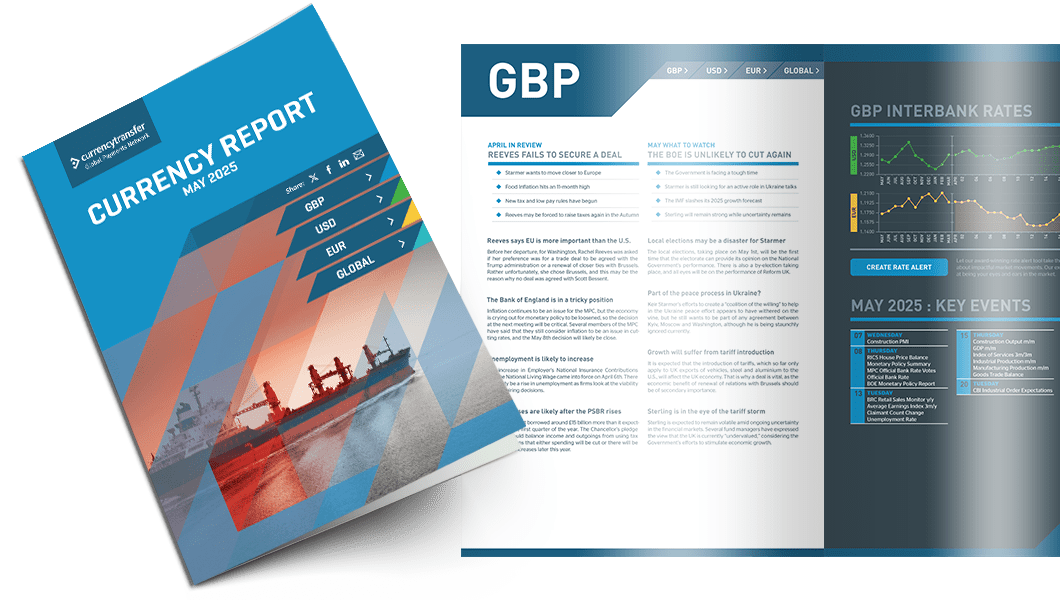
Read our latest currency report
Most impactful events planned this month and how they could impact your business
Warsh has a point on AI and inflation
Warsh, if confirmed by the Senate, would succeed Fed Chairman Jerome Powell for a four-year term.
Trump’s nomination has been transmitted to the Senate, the White House said in a statement posted online on Wednesday.
That transmittal came more than a month after Trump first publicly announced his desire to appoint Warsh as Fed chairman.
Sen. Thom Tillis, a North Carolina Republican, has said he will block Warsh’s nomination from proceeding in the Senate until a federal criminal investigation of Powell by the U.S. attorney’s office in Washington, D.C., is dropped or completed.
Tillis’s stance could prevent the nomination from being considered by the full Senate.
Powell said in mid-January that he was under investigation in connection with the $2.5 billion renovation of the Federal Reserve’s headquarters in Washington and his testimony about that project to the Senate.
The Chair also said that “the threat of criminal charges” against him is directly due to his and other FOMC members' refusal to bow to Trump and his demands that they cut interest rates more quickly.
Last summer, Trump also tried to fire Fed Governor Lisa Cook, who sided with Powell on interest rate decisions. Trump, at the time, cited an allegation by a housing official he had picked that Cook had committed mortgage fraud. Still, his move to terminate her position was also seen as motivated by his ire over her stance on interest rates.
Cook, who has denied any wrongdoing, has remained on the Fed pending the outcome of a lawsuit against Trump challenging her removal.
The Supreme Court heard oral arguments in that case in January. The court has yet to rule on whether Trump can fire Cook.
Meanwhile, Warsh claims artificial intelligence will justify lower interest rates. That is a mightily convenient view for the person nominated by President Donald Trump to be the next chair of the Federal Reserve with a mandate to cut rates.
The former Morgan Stanley banker may still be onto something, though. Letting economic orthodoxy constrain genuine growth would be a mistake.
The debate among economists over the likely impact of AI has been raging for years. In the United States, technology may already be helping workers be more efficient. Revised data from the Bureau of Labour Statistics imply that hiring slowed far more than initially thought in 2025, even as GDP remained strong, suggesting workers became more productive.
Sectors that have embraced AI, notably telecom operators, broadcasters, and publishers, have seen productivity rise more than in hotels and restaurants, where the technology has fewer obvious applications.
The Kansas City Fed President, Jeffrey Schmid, cautions that direct AI use remains patchy, but industries that expect a big role for large-language models seem more willing to limit headcount.
Later today, the latest employment figures are set to be released. The prediction for the headline Non-farm payrolls remains at 60k new jobs, having been created in January, which is less than half of January’s number.
Economists and market analysts will argue back and forth about whether such a tepid number will encourage the Fed to cut rates, but with all that is taking place in the Middle East currently, the most likely outcome is that the FOMC will hold fire this month.
The dollar index continues to creep almost unnoticed towards the pivotal 100 level. However, there is still a significant number of sell orders placed between 99.50 and 99.80, keeping a lid on any significant rally in the Greenback.
The War in Iran Threatens Inflation Stability in the Eurozone
As the US-Iran war entered its sixth day, the conflict has widened beyond Gulf states and into Asia, convulsing global markets and raising questions about the ECB's benign outlook.
ECB Vice President Luis de Guindos and the Central Bank Governors of Germany and Finland all said it was too early to conclude, but warned that a prolonged conflict may push up inflation, both present and expected.
"Our baseline is that this is going to be short-lived," de Guindos told an event in Brussels. "If it is longer, then there is a risk that inflation expectations will change." Inflation in the Eurozone has been hovering around the ECB's 2% target, on par with the ECB's own policy rate.
But the minutes of the Central Bank's last meeting, published yesterday, showed that policymakers were already worrying about geopolitical uncertainty in countries such as Iran, as the buildup of American firepower in the region began.
Eurozone retail sales fell unexpectedly in January despite a rise in consumer confidence at the start of the year, pointing to fragility in household sentiment even before this week’s surge in energy prices.
Sales volumes were down 0.1% month on month, compared with 0.2% growth in December, the European Union’s statistics agency confirmed. A consensus of economists polled by The Wall Street Journal expected a 0.3% rise.
The figure for December was revised up from a 0.5% decline.
Lower sales of non-food products and automotive fuel drove the fall in January. Volumes were down 0.9% in Germany, the eurozone’s largest economy, while sales rose in France, Spain and Italy.
This comes despite the bloc showing resilience to rising headwinds at the beginning of 2026. On Wednesday, data showed the eurozone unemployment rate falling to a record low in January, but employment figures for the entire bloc are notoriously unreliable.
Consumer confidence also picked up in the month, according to figures published last week.
But looking ahead, the outlook is likely to be dragged by rising geopolitical uncertainty and energy prices following U.S. and Israeli strikes on Iran.
This week’s increase in gas and oil prices may dent confidence a bit and raise household inflation expectations, and possibly lead to a further pullback in consumer confidence.
Expats and locals in Cyprus are becoming increasingly concerned about Sir Keir Starmer’s stance on the protection of the island from the war that is raging now in both Iran and Lebanon. A drone that was thought to have hit the runway at the Akrotiri RAF base did, in fact, hit and damage a hangar, pictures that were published yesterday showed. “While Greece and France have sent substantial protection to the island, the UK has been tardy in providing anything other than vague promises”, a representative of the Chamber of Commerce remarked.
The common currency continues to trade close to its short-term support level. As the weekend approaches, there are fears of a significant increase in American and Israeli activity, timed to coincide with the markets being closed.
The euro fell to a low of 1.1559 yesterday and closed at 1.1604.
Have a great day!

Exchange rate movements:
05 Mar - 06 Mar 2026
Click on a currency pair to set up a rate alert
Alan Hill
Alan has been involved in the FX market for more than 25 years and brings a wealth of experience to his content. His knowledge has been gained while trading through some of the most volatile periods of recent history. His commentary relies on an understanding of past events and how they will affect future market performance.