
Highlights
- HSBC CEO warns Britain needs wealthy banks to drive economic growth
- US services activity continues to expand on resilient demand
- AI Investment Shift Helps Offset Drag on Eurozone Growth
Get bank-beating rates — zero hidden fees
Join 10,000+ clients transferring salary, property deposits and business payments globally.


The Bank of England raises the testing bar for frontier AI
HSBC unveiled a whopping £14.5 billion in half-year profits and a £740 million share buyback. The bank's profits have been growing exponentially since the end of the pandemic, and the latest figures have attracted the attention of the Treasury.
Chief executive Georges Elhedery warned the Prime Minister that the economy would be hit if the banking sector were subject to the extra levy demanded by some campaigners. ‘Growth requires strong banks,’ Elhedery said as he unveiled a 23% rise in profits to £14.5 billion in the first half of the year, driven by ‘strong growth’ in HSBC’s wealth management unit in Asia.
The bank also reported that profits at its UK arm had grown by 7.7% to £2.9 billion. ‘For growth to manifest, you need businesses to be confident and invest,’ Elhedery said. ‘For businesses to invest, you need them to have access to financing. And banks are the preferred source of financing for these businesses,’ he added.
Banks in the UK are facing the challenge of many of their customers exploring private finance options as the market continues to grow and become more sophisticated.
The comments echo those made by NatWest boss Paul Thwaite last week, who called for ‘consistency of policies so businesses can plan’.
Banks pay a 3% surcharge on top of the standard 25 percent corporation tax rate following a cut in 2023.
Separately, officials at the Treasury are considering raising billions of pounds in additional borrowing by using flexibility within the government's fiscal rules, The Times reported yesterday.
Chancellor John Healey told the newspaper there was "scope for more and more rapid investment." Healey intimated that the cash could be spent on infrastructure, housing, and support for businesses.
Former Chancellor Rachel Reeves changed Britain's fiscal rules in 2024 to take public-sector assets into account when assessing the government's debt levels, allowing for more public borrowing for investment.
Analysts have said extra borrowing could be channelled through public agencies such as the British Business Bank, the National Wealth Fund and the National Housing Bank. Some money could be shared with regional mayors, boosting the Prime Minister's plans to devolve power away from Central Government, The Times reported late on Tuesday. Burnham has intimated that he would use "any flexibility" within the fiscal rules while maintaining budgetary discipline.
Investors in British government debt are watching for signs of more borrowing by the new government. Yields on gilts are the highest among the bonds issued by G7 nations.
Long-dated gilts were little changed yesterday.
Advances in AI are raising concerns at the Bank of England, particularly among the Bank’s Governor, about how ‘Frontier AI’ is regulated when used by firms in the finance industry. Andrew Bailey is placing stress testing, penetration testing and pre-deployment model assessment at the centre of the response to AI-driven cyber threats, while prompting a wider debate about how regulators demonstrate the effectiveness of their own controls.
In an open letter to the Daily Mail, recently published by the Bank, the Governor rejected the paper’s assertion that the Bank’s cyber defences are “unsophisticated” as “totally wrong, unfounded and dangerous”.
“For obvious security reasons we do not discuss our defences in detail,” Bailey wrote.
However, Bailey assured readers that the Bank has “the right investment, expertise and capabilities” and works closely with specialist partners, including the National Cyber Security Centre.
The exchange highlights a familiar challenge for quality assurance and cyber resilience teams: how can an institution provide credible evidence that its systems have been rigorously tested without revealing information that could help potential attackers?
Bailey shifted the focus from the Bank’s own controls to the wider risks that frontier AI poses to financial institutions and their customers.
“Frontier AI may make cyber-attacks faster and easier to perpetrate, outages more disruptive, and scams by criminals more convincing,” he warned.
The Bank has repeatedly told firms to strengthen their ability to identify attacks, address vulnerabilities and restore services after disruption.
Frontier AI refers to the most advanced, general-purpose AI systems at the cutting edge of current capability, typically built with extremely large compute budgets and exhibiting emergent behaviours that don’t appear in smaller models.
The Pound had a quiet, mildly positive session yesterday, with moves driven almost entirely by US data and global risk sentiment rather than UK‑specific news. Across major pairs, Sterling was firmer against the US Dollar, flat against the Euro, and mixed elsewhere, reflecting a market trading on external catalysts rather than domestic ones.
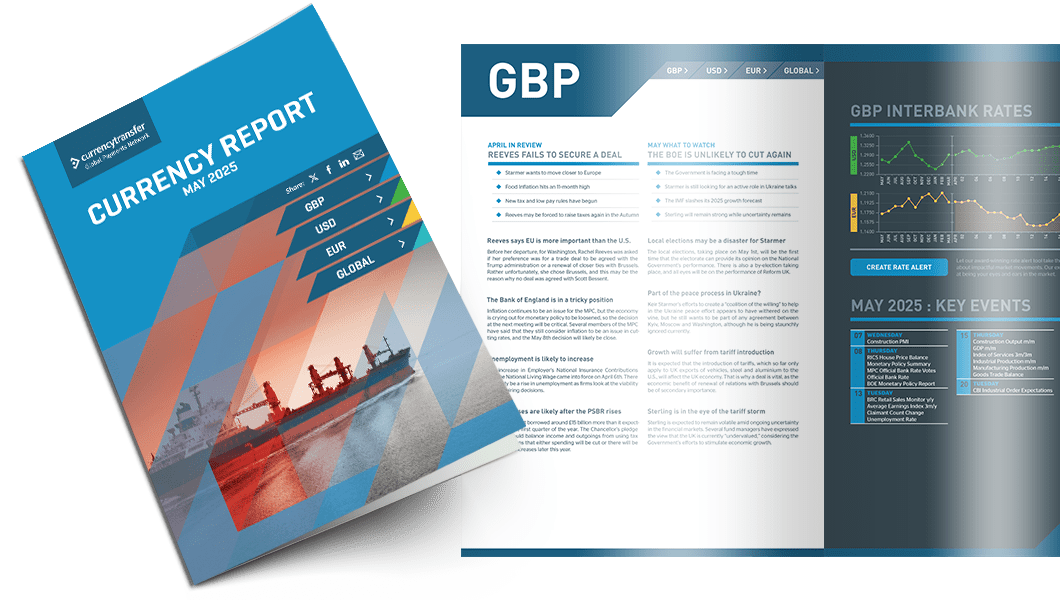
Read our latest currency report
Most impactful events planned this month and how they could impact your business
Fed Credibility Is Now the Market’s Biggest Trade
Private credit's expansion began as a means of funding private equity groups' buyouts after the 2008 financial crisis dried up bank financing. It then swelled into a primary source of debt financing for riskier businesses, attracting capital from income-hungry investors.
Though still tiny compared with the traditional banking industry, the sector has been dogged by concerns over lending standards and a lack of transparency.
The survey would segment the market into three sections based on borrower size: an upper middle market with more than $100 million in earnings before interest, taxes, depreciation and amortisation; a middle market between $30 million and $100 million EBITDA; and a lower middle market with less than $30 million EBITDA, the statement said.
Findings of the survey are expected to be published in the first quarter of 2027, it said.
Regulators have struggled to assess the potential dangers of private credit to banks due to a dearth of data and the inability to force the unregulated industry to disclose information.
"In recognition of the growth of private credit, this survey will provide insights into the availability of credit, credit provision, the evolution of lending standards in private credit markets, and the implications for the broader economy and monetary policy," the New York Fed said.
The pace at which investors are demanding money back from some private credit funds, often known as business development companies, has accelerated this year amid worries about competition, falling returns, and fears that artificial intelligence will upend software businesses they finance.
The US service sector expanded at a steady pace in July, bolstered by a pickup in new orders and business activity.
The Institute for Supply Management’s (ISM) services index rose by 0.1 point to 54.1, according to data released yesterday.
New orders growth accelerated, and a measure of business activity climbed to a five-month high, pointing to resilient consumer demand. Even so, rising costs for services and materials continued to weigh on firms.
ISM’s index of prices paid jumped to 70.3 in July as the collapse of an interim deal between the US and Iran pushed oil and gasoline prices higher.
Some firms may be choosing to hold off on hiring as persistently high costs pressure profits and consumers. The sector’s employment gauge signalled the sharpest contraction in headcount since March.
“Respondents still mentioned tariff impacts and the Middle East conflict, but far less frequently than in prior reports,” said Steve Miller, chair of ISM’s Services Business Survey Committee, in a statement. “The World Cup was again cited in comments on increased business activity and new orders.
Overall, the US services economy remains resilient.”
Thirteen sectors within the survey reported growth, including retail trade, transportation and warehousing, and construction, while four sectors contracted.
Federal Reserve Chairman Kevin Warsh’s communication strategy was put to a stern test after the Central Bank decided to leave its key policy rate unchanged last week, which triggered a sharp sell-off at the long end of the Treasury curve.
The 30-year yield surged past 5.20%, its highest close since 2007, while the 2s10s yield curve steepened by 14 basis points as bond investors questioned the Fed’s stance on rising inflation. Warsh’s departure from explicit forward guidance is intended to reintroduce risk pricing and eliminate moral hazard, but the lack of clarity is eroding the Bank’s credibility.
The Dollar weakened yesterday, recording modest but broad losses against major currencies, as markets shifted into risk-on mode and US data failed to support the greenback. The US Dollar Index fell 0.18%, closing at 99.68, its lowest level in over a week.
Italy services growth strengthens in July as cost pressures ease
The Eurozone services PMI climbed to 51.7 in July from 49.4 in June, marking its highest level in five months. Market expectations had pointed to a composite PMI of 51.9 and a services PMI of 51.6 for July. The data indicated that production and new orders increased in July as inflation in the Eurozone lost momentum.
PMI values of 50 or above indicate expansion in the sector, while values below 50 indicate contraction.
Uncertainty stemming from wars and trade friction will continue to weigh on euro zone economic growth this year. Still, a shift in business investment towards intangible assets such as AI appears to be mitigating the drag, the ECB said on Wednesday.
Uncertainty is estimated to have reduced Eurozone economic growth by 0.4% in the first quarter of 2026 compared with 2025, as firms and households curbed spending, and it will continue to weigh on activity for the rest of the year.
However, spending on intangibles appears more resilient, and corporate surveys suggest that significantly increased spending on artificial intelligence so far this year is providing a buffer for an economy expected to grow by only 1% in 2026.
"To the extent that the ongoing shift in the composition of investment towards intangibles continues, the aggregate response of investment to uncertainty shocks may become more muted over time," the ECB said in an Economic Bulletin article. "Such a shift could therefore act as a gradual stabiliser of the investment cycle, even as uncertainty itself remains a significant driver of fluctuations," the ECB added.
Households also curb spending in times of uncertainty, postponing big-ticket purchases such as cars. Still, the overall drag is relatively small, and spending recovers quite quickly after uncertainty eases, the ECB added. Business spending on tangibles normally takes a much bigger hit and remains subdued for quite some time even after the shock, the ECB added.
Growth in Italy's service sector strengthened in July, and cost pressures continued to ease, a survey published yesterday showed, offering some encouraging signs for the Eurozone's third-largest economy. S&P Global's Purchasing Managers' Index (PMI) for the service sector rose to 52.5 from June's 50.2, moving further into expansion. A Reuters survey of 14 analysts had pointed to a reading of 51.3.
The services PMI had posted three successive sub-50 readings between March and May, following the U.S.-Israeli attack on Iran at the end of February. The survey's measure of input cost inflation fell for a second month running in July to 61.2 from 62.1, after a three-and-a-half-year peak of 66.7 in May. The employment sub-index rose to 52.7 from 50.4, and the new business indicator climbed to 53.9 from 51.0, posting its highest reading this year.
The Italian economy has held up better than many analysts expected in the first half of this year, with gross domestic product rising by 0.3% in the first quarter and 0.2% in the second. Giorgia Meloni's Government forecast full-year 2026 growth of 0.6% in a report issued in April, but the budget watchdog UPB this week issued a significantly more upbeat projection of 0.9%.
S&P Global's sister survey for Italy's smaller manufacturing sector, released on Monday, showed growth slowing in July. However, the composite PMI, which combines manufacturing and services, rose to 52.5 in July, the highest level since November last year, up from 50.8 in June, indicating a fourth consecutive month of expansion.
The euro strengthened yesterday, recording a clear, broad-based gain against the US dollar and holding steady or slightly firmer against most major currencies. The move was driven by strong Eurozone PMI data and US dollar weakness, rather than any single dramatic euro-specific catalyst.
Have a great day!

Exchange rate movements:
05 Aug - 06 Aug 2026
Click on a currency pair to set up a rate alert
Alan Hill
Alan has been involved in the FX market for more than 25 years and brings a wealth of experience to his content. His knowledge has been gained while trading through some of the most volatile periods of recent history. His commentary relies on an understanding of past events and how they will affect future market performance.