
Get bank-beating rates — zero hidden fees
Join 10,000+ clients transferring salary, property deposits and business payments globally.


The debate is no longer theoretical
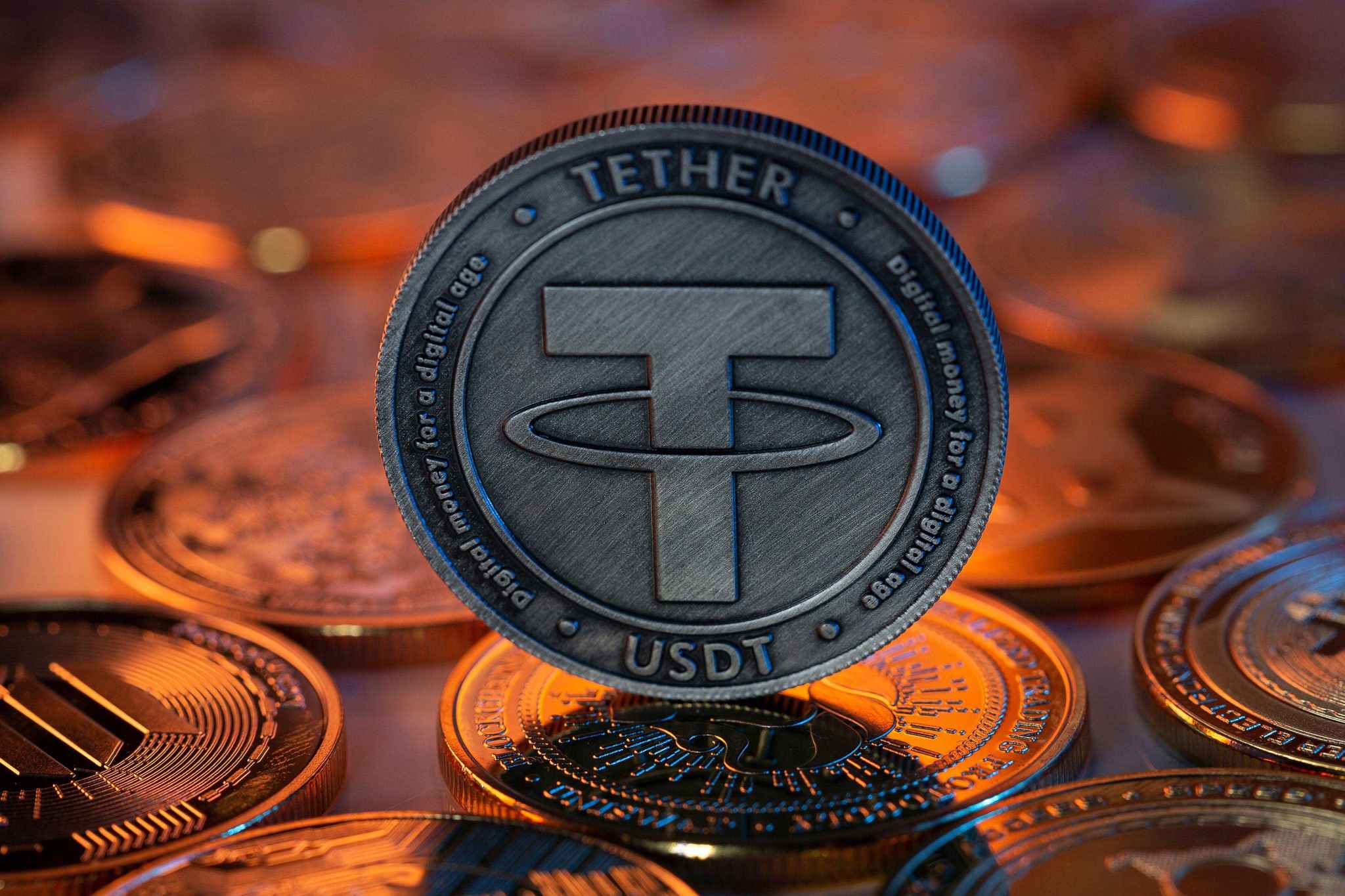
Stablecoins are no longer a niche crypto side story. The European Central Bank said in May 2026 that stablecoins had grown from less than USD ten billion six years earlier to more than USD three hundred billion, and that nearly 90% of the market was concentrated in just two issuers, Tether and Circle. The IMF has also noted that stablecoin cross-border payment flows were about USD one and a half trillion in 2024, even if that still represents only a small share of the overall global payments market. That is why the stablecoins vs bank transfers conversation has moved into mainstream payments strategy, especially for cross-border use cases.
Most stablecoin activity still sits outside everyday regulated payments
That said, stablecoins are still early relative to mainstream bank payments. The Bank of England said in November 2025 that the predominant use of stablecoins today remains non-systemic activity such as buying and selling cryptoassets, rather than day-to-day regulated payment flows. The FCA has been explicit that stablecoins may bring efficiency benefits for cross-border payments, but it is still building the UK rulebook for issuance, custody and wider conduct standards. In other words, stablecoins are increasingly part of the payments conversation, but they are not yet naturally aligned with the current banking system in the way ordinary bank transfers already are.

Stablecoins vs bank transfers on speed
On pure infrastructure speed, stablecoins have a genuine advantage. Ethereum’s own documentation says block time is organised into twelve-second slots, and the Bank of England has described distributed ledger platforms as capable, in theory, of near-continuous twenty-four-seven settlement. That is why stablecoin advocates talk about payments moving at internet speed. But there is an important caveat: a fast on-chain transfer is only the middle of the journey if the sender first has to buy stablecoins and the recipient then has to convert them back into local currency. The FCA’s own consultation notes that stablecoins are often used within broader activities such as on- and off-ramping, which means end-to-end speed still depends on compliance checks, liquidity and banking availability at both ends.
Cross-border business bank payments still often miss the instant ideal
For international business payments, official data still shows a sizable speed problem on bank rails. In the Financial Stability Board’s 2025 cross-border payments progress report, using data as of March 2025, only five point nine per cent of cross-border B2B payment services credited funds within one hour, and only forty-three point two per cent did so within one business day. That is the strongest case for stablecoins today: not that they are always faster than banks in every situation, but that they can bypass the multi-step delays that still affect many correspondent-banking corridors.
In the UK, domestic bank transfers already narrow the gap
The stablecoins vs bank transfers comparison looks very different inside the UK. Pay.UK describes Faster Payments as the UK’s twenty-four-seven real-time payment system, and its 2026 proposed rule clarification says Near Real-Time guidance means outcomes should be available within ten seconds for ninety-five per cent of payments and fifteen seconds for the remaining five per cent. So if the payment is domestic and denominated in sterling, stablecoins are not automatically faster than a normal bank transfer. Their speed edge is far clearer when the payment is cross-border, off-hours, or dependent on multiple correspondent banks.
Traditional bank rails are improving as well
Another reason this comparison is more nuanced than many crypto articles suggest is that bank infrastructure is moving forward. In May 2026, the Bank of England set out a path towards near twenty-four-seven RTGS and CHAPS settlement, confirming that CHAPS will open from one-thirty in the morning on weekdays from September 2027 and consulting on weekend and longer-hour settlement beyond that. The Bank’s stated aim is to make cross-border payments faster, cheaper and more efficient by extending overlap with other RTGS systems. So while stablecoins are faster on the raw settlement layer today, the incumbent rails are not standing still.
Stablecoins vs bank transfers on cost
Cost is where dissatisfaction with traditional transfers is easiest to quantify. The World Bank’s Remittance Prices Worldwide database said in August 2025 that the global average cost of sending USD two hundred was six point three six per cent of the amount sent, still far above the Sustainable Development Goal target of three per cent. The World Bank also reported that in late 2023, digital remittances averaged around five per cent versus seven per cent for non-digital methods. That helps explain why new payment rails, including stablecoins, keep attracting attention: international transfers remain too expensive for many users.
Foreign exchange often matters more than the transfer fee
One of the most useful findings for businesses is that the payment rail is often not the whole story. The Financial Stability Board said in its 2025 progress report that FX costs remained the largest component of overall costs in cross-border retail payments. That matters because many businesses focus on the visible transfer fee while missing the less obvious exchange-rate markup. In practice, that means a company comparing stablecoins vs bank transfers should ask not just “what does the transfer cost?” but also “what FX rate am I getting, and where are spreads being added?” That is exactly why so many firms look for alternatives to bank pricing rather than alternatives to bank accounts. If hidden FX is the real problem, CurrencyTransfer’s guide to sending large international business payments without bank markups is often the more practical starting point.
Modern bank infrastructure can slash costs when the plumbing improves
It is also wrong to assume that only stablecoins can make cross-border payments cheaper. The World Bank highlighted in March 2026 that after Albania, Montenegro and North Macedonia joined SEPA, average B2B transfer costs fell tenfold in the months after launch. In Montenegro, the average cost of a SEPA transaction between October 2025 and January 2026 was €6.15, compared with €73.4 per transaction in 2024 under the older correspondent-banking model. That is nearly twelve times cheaper without asking businesses to change their accounting base currency or treasury controls. The lesson is clear: cheaper international payments can come from better banking infrastructure just as well as from new blockchain rails.
Stablecoins vs bank transfers on safety
On safety, bank transfers still have the stronger institutional base. The Bank of England says central bank money remains the ultimate risk-free settlement asset and the anchor for the singleness of money. In the UK, the FSCS says that since 1 December 2025, eligible deposits with UK-authorised banks, building societies and credit unions are protected up to £120,000 per eligible person, per authorised firm. The Payment Systems Regulator has also required APP scam reimbursement protections for individuals, microenterprises and charities on in-scope UK bank transfers over Faster Payments and CHAPS from 7 October 2024. These are not perfect protections for every business scenario, but they show how much legal and supervisory infrastructure already sits around bank money.
Institutional protection does not mean bank transfers are fraud-proof
Bank transfers are safer institutionally, but they are not free from risk. UK Finance reported that APP fraud losses fell to £450.7 million in 2024, yet fraud remained significant and international payments accounted for eleven per cent of APP losses, up from six per cent in 2023. The same report said seventy per cent of APP cases started online. So even though bank transfers operate inside a tightly supervised system, treasurers and individuals still need good controls such as beneficiary checks, fraud monitoring and payment approvals. Safety is partly about the rail, but it is also about the human and operational environment around that rail.
Stablecoins bring a different set of risks
Stablecoins do not remove risk so much as rearrange it. In its 2025 Annual Economic Report, the BIS said stablecoins perform poorly against the system-level tests of integrity, singleness and elasticity. It warned that, because public blockchains are pseudonymous and stablecoins are bearer-like instruments, they can be prone to KYC weaknesses and illicit use if safeguards are not built around them. That does not mean every stablecoin payment is unsafe, but it does mean the safety model is different from the banking system’s model of supervised institutions, central bank settlement and clear legal recourse.
Stable value is not the same as guaranteed value
Another important distinction is that “stable” does not mean “cannot wobble”. The ECB noted in May 2026 that the two biggest stablecoins usually trade within one per cent of the dollar on major venues, but can diverge sharply during stress episodes. It cited examples of USD Coin falling to about USD 0.87 in March 2023 and Tether to about USD 0.90 on some platforms in October 2018. For a treasury team, that matters because short-lived depegs can become real losses if funds have to be sold, transferred or redeemed during a stress event. Bank deposits can create their own risks, but they do not normally ask the customer to evaluate issuer-specific peg resilience in the same way.
Regulation is improving, but protections still differ by regime
The good news for stablecoins is that regulation is getting stronger. The EBA and the European Supervisory Authorities say that under MiCA, holders of electronic money tokens have the right to redeem at full-face value in the referenced currency, while asset-referenced token holders can redeem at the market value of the referenced assets. In the UK, however, the FCA said it was not proposing to extend FSCS cover to regulated stablecoin issuers or custodians, and the Bank of England has also insisted that stablecoins should be clearly differentiated from deposits because they carry different protections. So regulated stablecoins are becoming safer than the unregulated market that came before them, but they are still not equivalent to a bank deposit in legal treatment or safety net design.
Where stablecoins work best today
Today, stablecoins make the most sense where the payment can remain digital from end to end. That includes treasury movements between regulated counterparties, certain marketplace payouts, settlement between crypto-native firms, and urgent cross-border transfers where weekends and bank cut-off times are a real constraint. In those settings, the benefits of always-on availability, fast ledger updates and payment finality are meaningful. For merchants, finality can even be a feature rather than a bug, which is why interest in irreversible payments has grown. But the same finality also means operational mistakes and fraud can be harder to reverse.
Fiat bank transfers still suit most mainstream business payments
For most ordinary business payments in 2026, bank transfers still fit more naturally. Suppliers expect fiat in a bank account. Finance teams reconcile in local currency. Auditors and policy committees are used to banking controls. And where a company wants cheaper cross-border payments but not crypto custody, the middle ground is often a specialist FX and payments platform that improves pricing and transparency while keeping the familiar fiat endpoint. That is why the real-world choice is rarely just stablecoins vs bank transfers in the abstract. It is often a choice between a bank, a specialist provider and an on-chain workflow, depending on what matters more: speed, landed cost or legal certainty.
The verdict for cross-border payments
If the question is which rail is faster, stablecoins usually win for cross-border payments because they can move around the clock and avoid some correspondent-banking delays. But if the question is which payment arrives faster in the format the recipient actually wants, the answer is more complicated. Domestic UK bank transfers are already near-instant, and cross-border bank rails are gradually extending hours and improving reach. For speed, stablecoins lead on the raw settlement layer; banks are catching up on the user experience layer.
Cheaper and safer depend on the full payment stack
If the question is which option is cheaper, stablecoins can be compelling when both sides are willing and able to stay on-chain. But once you add on-ramping, off-ramping and FX, the savings are highly corridor-specific. Official data still shows international transfers are too expensive, yet it also shows that modern bank infrastructure and better FX execution can reduce costs dramatically. If the question is which option is safer, bank transfers still win overall today because they sit inside a more mature framework of supervision, reimbursement, deposit protection and central-bank-anchored settlement. Regulated stablecoins are improving fast, especially in the EU, but they remain more dependent on issuer quality, custody design and jurisdiction. For most businesses, the best answer is not ideological. It is operational: use the rail that gets money to the right place, in the right form, with the right level of protection for the payment you are making.
If you’re looking for an efficient solution to transfer currencies into various countries, take a look at our platform: CurrencyTransfer offers access to a network of payment providers, live quotes and 5-star customer service. Sign-up today.
Caleb Hinton
Caleb is a writer specialising in financial copy. He has a background in copywriting, banking, digital wallets, and SEO – and enjoys writing in his spare time too, as well as language learning, chess and investing.