Highlights
- Let the games begin
- Bessent is trying to ensure the dollar’s dominance during economic turmoil
- The Eurozone economy has suffered more than the US in enduring the Iran conflict
Get bank-beating rates — zero hidden fees
Join 10,000+ clients transferring salary, property deposits and business payments globally.


New legislation gives the Government power to bring British Steel into public ownership
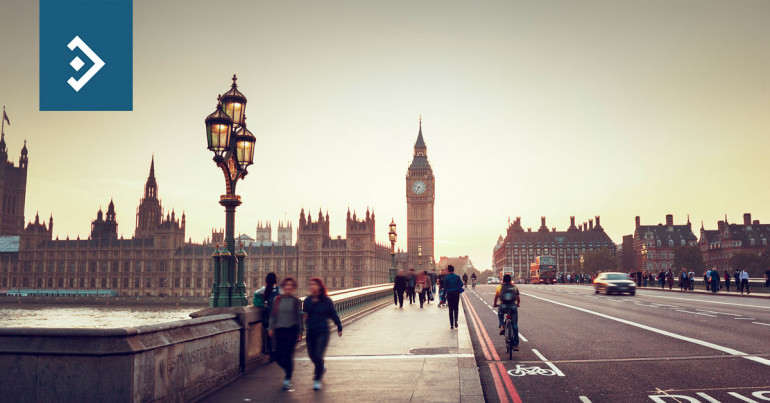
When Labour swept to power less than two years ago, it had an ambitious agenda to smash the gangs sending illegal migrants across the English Channel in small boats, build 1.5 million new homes and transform the Health Service.
There has been little to no progress, while the economy has continued to suffer as growth has plummeted and the cost of living has risen substantially.
The role of Prime Minister requires more than the dour efficiency that Sir Keir Starmer has tried to bring to it and failed to deliver. He has wanted to be seen as the person who dragged the country out of the mire caused by thirteen years of Conservative austerity, but has lacked the wherewithal to make even a dent in the issues.
His supporters point to his foreign policy successes, but his poor decision-making, highlighted by the “Mandelson Affair”, will probably cost him his job.
Starmer’s likely successors: Angela Raynor, Wes Streeting and Andy Burnham face a tough task in turning the Party’s fortunes around, given the issues that will pre-exist their appointment.
Burnham must win a by-election before he can take the seat in Parliament, which is a prerequisite of his standing to become the Party’s leader. At the same time, Raynor and Streeting represent a significant part of the failures of the past two years.
One positive outcome from yesterday’s speech was the announcement of the re-nationalisation of British Steel. Steelmaking is an inherent part of the country’s fabric, but only if it can be more than an albatross around the country’s neck. Simply announcing that it is to be taken back into Government ownership belies the huge amount of work, skill, and good fortune needed to make it successful.
The pound suffered from a fall in risk appetite yesterday as President Trump said he considered the ceasefire between the U.S. and Iran to be “being on health-support”. Sterling initially fell to a low of 1.3539, but recovered to close at 1.3610.

Set up a bookable rate alert
Automatically execute a currency purchase when your desired rate is reached
Warsh says he made no rate-cut promises to Trump
Powell exits with a legacy defined above all by his defence of Central‑Bank independence, forged through years of political pressure and economic turbulence. Across multiple reports, three themes dominate: his crisis management, his inflation missteps, and his refusal to let the White House bend the Fed’s decisions.
Powell’s final years were marked by open conflict with President Trump: the President repeatedly demanded deep rate cuts and publicly criticised Powell, who resisted, insisting that any cuts be justified by economic weakness rather than political pressure. In a tribute to Powell, Forbes highlights that Powell will be remembered for “standing up to Trump” even as the administration attempted to investigate him.
Powell’s replacement. Kevin Warsh, who is thought by many to be Trump’s “sock puppet, told Congress yesterday that he had made no promises to President Donald Trump about cutting interest rates, as he sought to reassure U.S. senators considering his confirmation to lead the U.S. Central Bank that he would act independently of the White House while pursuing broad reforms.
In a hearing that ranged from Warsh's calls for "regime change" at the Fed to contentious exchanges over his personal finances, the 56-year-old lawyer and financier said that in his conversations with Trump about the job, "the President never asked me to commit to interest rate cuts, he did not demand it, and the President never asked me to commit to any such thing nor would I do so."
One of Warsh’s original rivals for the Chairman’s role, Kevin Hassett, has accused Powell of “creating political conflicts” during an appearance on CNBC on Monday.
“I’m really thrilled that my friend Kevin Warsh is about to be confirmed,” said Hassett. “I think there’s an underappreciated reason why markets are doing so well, that there’s going to be a change of leadership at the Fed, with leadership that’s going to be more level-headed, less prone to creating political conflicts that are, you know, different from the charge of the Fed.”
Unless Warsh is an AI bot, Hassett’s remarks appear to be little more than an exercise in flattery for the President.
Scott Bessent, the U.S. Treasury Secretary, is trying to preserve the dollar’s dominance during global economic turmoil by reinforcing the pillars that make the dollar indispensable, even as those pillars face unprecedented strain. Across recent analyses, three strategies stand out: shoring up institutional credibility, leveraging geopolitical and financial tools, and countering global diversification away from the dollar.
Economic turmoil has accelerated hedging against the dollar. Countries and firms are: diversifying FX reserve, increasing gold and Bitcoin holdings, expanding non‑dollar payment systems, and using alternative liquidity backstops (notably China’s PBOC swap lines)
In response, the U.S. is working to preserve the dollar’s network effects; the scale advantages that make it the default for trade invoicing, reserves, and global finance. This includes maintaining Treasury market depth and ensuring the U.S. remains the most liquid and trusted issuer of safe assets.
The dollar index had a quiet day yesterday, as traders and investors considered whether there is about to be a major escalation of the conflict between the U.S. and Iran. Trump rubbished Iran’s peace proposals, even though he told reporters that he “didn’t waste his time” by actually reading them.
The index fell to a low of 97.85 and closed at 97.94.
Schnabel worried about the quiet erosion of Central Bank Independence
This is according to a study included in a preview of the European Central Bank's economic bulletin, which examines the potential effects of the war in the Middle East.
The analysis, assuming an energy shock similar to that of 2022-23, outlines a scenario in which "the worsening terms of trade erodes real income, as imported energy prices rise while nominal wages adjust slowly, weighing on consumption." This raises inflation by 0.4%, almost entirely due to the energy component, and slows growth by 0.1% in 2027. In 2028, these effects will be less pronounced.
Facing a period of stagflation, the ECB will revert to its tried-and-tested methods, in which it focuses on inflation and lets growth take care of itself.
For this reason, the Bank’s Governing Council is expected to raise interest rates by twenty-five basis points at its June meeting.
ECB Board Member Isabel Schnabel recently took up the cause of Central Bank independence, telling reporters that Political attacks on Central Bank independence are deeply disconcerting.
She went on, “The current moment is particularly concerning, as direct political pressure is not arriving in isolation. It comes on top of structural forces that are quietly eroding the conditions under which independent monetary policy is effective.
The first is the sustained increase in government debt to levels that risk creating a tension between price stability and fiscal sustainability, giving rise to fiscal dominance. The second is the renewed momentum towards financial deregulation, which, by reducing the resilience of the financial system, can create the conditions for financial dominance, the implicit need to prioritise financial stability over price stability.
She argues that preserving Central Bank independence rests not only on sound legal foundations, but also on robust fiscal and regulatory frameworks that secure both debt sustainability and financial stability, as well as on a clear commitment by Central Banks to operate within the boundaries of their mandate.
The Euro followed the taper, which drove the dollar yesterday. The common currency rallied to a high of 1.1788 and closed at 1.1786.
Have a great day!

Exchange rate movements:
11 May - 12 May 2026
Click on a currency pair to set up a rate alert
Alan Hill
Alan has been involved in the FX market for more than 25 years and brings a wealth of experience to his content. His knowledge has been gained while trading through some of the most volatile periods of recent history. His commentary relies on an understanding of past events and how they will affect future market performance.