
Highlights
- Britain is too reliant on Immigrants
- Factory orders collapse.
- Growth, not inflation, will be affected by tariffs
Get bank-beating rates — zero hidden fees
Join 10,000+ clients transferring salary, property deposits and business payments globally.


Tomorrow’s rate cut may be the first of many
Rayner has been the architect of a stunning change in workers’ rights, which will gradually weaken the economy, while Reeves has alienated two significant sectors, pensioners and farmers. Furthermore, having “discovered” a twenty-billion-pound hole in the UK’s finances, which she promised to repair, she has created an even bigger one, which is currently around forty billion pounds and still growing.
Economists fear that she may either be forced to impose huge tax increases in October or abandon her pledge to ensure that daily expenditures are covered by daily income.
A leading economic think tank is now warning that the Chancellor must resort to “moderate but sustained” tax rises to help repair Britain's battered economy. The National Institute of Economic and Social Research (NIESR) has highlighted U-turns on welfare cuts, high borrowing, and weak economic activity as contributing to a “worsening fiscal outlook”.
This is not what the electorate signed up for in July last year, and while it was prepared to give the Government both time and the benefit of the doubt, the situation is worsening almost by the day.
Deutsche Bank expects a further divergence in the near-term paths of Europe’s two major central banks, forecasting another rate cut from the Bank of England while suggesting the European Central Bank may now be finished with its own easing cycle.
In a note to clients, Deutsche Bank said it anticipates the BoE will lower the Base Rate by 25 basis points to 4.00% at its upcoming policy meeting on Thursday. That would mark the central bank’s fifth quarter-point cut this cycle, as policymakers continue to ease financial conditions amid cooling inflation and slowing domestic demand.
Reeves is now set for a £41.2 billion shortfall on her “stability rule” in 2029-30. This ensures that day-to-day spending is matched, so the Government only borrows to invest. NIESR warns that Labour will need to raise taxes, again, or cut spending in the Autumn Budget to plug the gap. The group has now cut its UK growth projection for next year to 1.2%, down from the previously expected 1.5%.
Meanwhile, the Prime Minister continues to “play the diplomat”, trying to deal with the crisis in Gaza, while simultaneously sorting out the mess that undocumented immigration has grown into.
As far as Gaza is concerned, no amount of grandstanding will change the fact that Israel will only listen to the voice of the U.S. President, while the only way to deal with the small boats is to make crossing the Channel less attractive to the migrants.
If those waiting on French beaches saw migrants being turned back as soon as they reach British shores, they may just think twice about the futility of making the crossing, which would lower the numbers immediately.
The pound is having a quiet, yet volatile week as the dollar has found the bottom of its new range. It advanced to 1.3316 yesterday but fell back to close at 1.3299
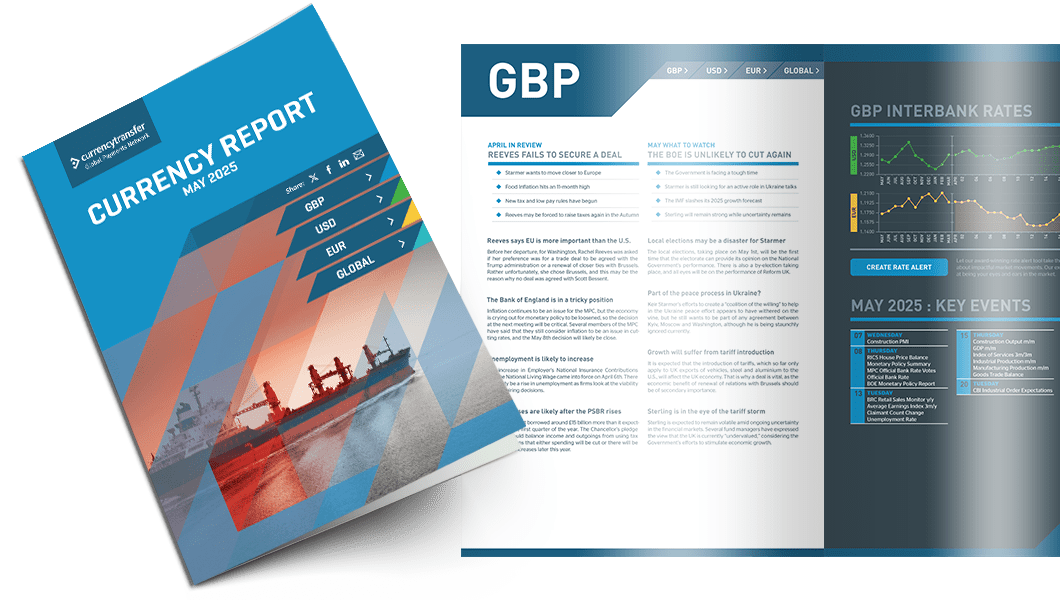
Read our latest currency report
Most impactful events planned this month and how they could impact your business
Aeroplane orders were the major casualty
An opposite effect was seen from yesterday’s publication of factory orders. On the face of it, the data appears to be appalling, going from an increase of 8.3% in June to a 4.8% fall in July.
However, this is down to one particular sector, and a highly volatile one at that. Orders for aircraft were down heavily.
Transport orders sank 22.4%, dragging the headline number lower, but strip those out, and factory orders rose 0.4%, beating forecasts. Durable goods orders got a downward revision to a 9.4% fall (after May’s 16.5% surge), while nondurables ticked higher, and shipments and backlogs both grew. Inventories also crept higher, hinting that supply chains might be holding steady and that companies aren't just guessing when they stock the shelves.
Manufacturing, which accounts for 10.2% of the economy, remains constrained by President Donald Trump's aggressive tariffs on imported goods. An Institute for Supply Management survey on Friday showed its measure of U.S. factory activity skidded to a nine-month low in July.
Trump sees the tariffs as a tool to raise revenue to offset his promised tax cuts and to revive a long-declining industrial base, a feat that economists argued was impossible in the short term because of labour shortages and other structural issues.
There was no reason to believe that the economy was performing above expectations earlier in the year, just as there is still no solid reason for doom-mongers to forecast a slump now.
The FOMC may well feel that it is acceptable to cut rates at its September meeting, but a revision to July’s jobs number and a more positive August result, coupled with any rise in inflation and economists will be back to square one.
President Trump could also use the selection of a new Fed Governor to position someone as the heir apparent to Powell, creating a competing voice that markets listen to for signals about the Fed’s future direction.
President Trump told reporters yesterday that he would make up his mind about a new Fed Governor to replace Adriana Kugler later this week.
The bonus for the President is that he can now spend less time complaining about Fed Chair Jerome Powell, since he can now focus on the person he may want to replace him.
Kugler offered no reason for her surprise resignation. We will probably have to wait until she is well out of the firing line before that snippet is published.
The dollar index is still recovering from its precipitous fall last Friday. It rallied to a high of 99.07 yesterday but drifted lower to close at 98.76.
Germany needs to catch up in the “global chip race”
In an interview with Econostream, Holzmann, whose term as governor of the Austrian National Bank will conclude at the end of this month, said, 'What most of us agreed at the last meeting is that monetary policy now needs to be characterised by a steady hand.'
'After so many interest rate cuts, we are at an expansionary level, 'he continued. Inflation is now well controlled, and the economy looks robust.
“Moving rates further south would be more risky than staying where we are and waiting until September,” Holzmann said, arguing that a further rate cut at this stage was likely to have “no effect” on economic activity in the Eurozone.
Investor confidence in the EU has fallen sharply after Donald Trump’s trade agreement with Brussels, amid mounting concern about the economic hit from the US president’s tariff war.
The latest snapshot from the Sentix index showed that investor sentiment fell significantly at the start of the month after the deal last week between Trump and the European Commission president, Ursula von der Leyen.
The data provider said its weekly survey of thousands of investors in more than 20 countries showed that the pact was a “deal that dampens the mood”, with Trump and the US viewed as “winners” at the expense of the eurozone.
“The result is devastating for the eurozone,” said Manfred Hübner, the managing director of the Sentix economic index. “The current situation and expectations are both declining. The wrinkles of concern in the economy are deepening again.”
There have been many words written and spoken about the trade deal, and none have been particularly complimentary. However, the ECB remains confident that the economy can wait before seeing another cut in interest rates.
However, the patience of investors and traders may well be tested should the data head south in the next couple of months as the tariffs take hold. It was a surprise that Brussels agreed to delay the imposition of its tariffs, giving the U.S. a clear advantage.
The Euro has gained marginally since the market is well aware that the majority of the Governing Council is currently on holiday and no comments are likely to be made that will shatter confidence for another couple of weeks.
The common currency climbed tentatively to a high of 1.1587 and closed at 1.1575.
Have a great day!

Exchange rate movements:
05 Aug - 06 Aug 2025
Click on a currency pair to set up a rate alert
Alan Hill
Alan has been involved in the FX market for more than 25 years and brings a wealth of experience to his content. His knowledge has been gained while trading through some of the most volatile periods of recent history. His commentary relies on an understanding of past events and how they will affect future market performance.