Highlights
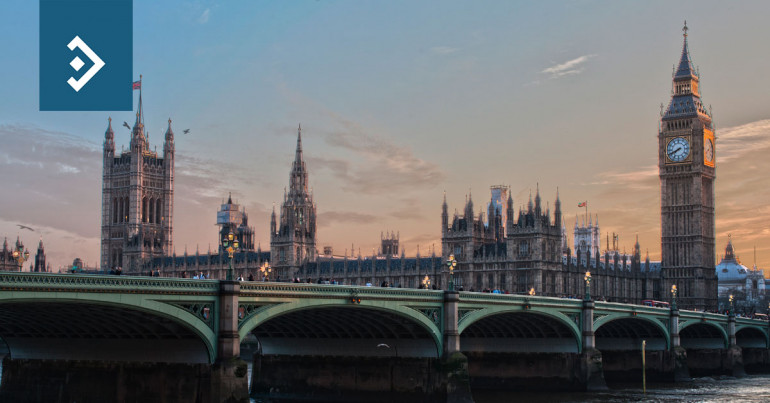
- Brexit is ten years old this week: Why the UK Economy Is 4-6% Smaller
- Bessent says the U.S. can achieve 3% GDP growth without reigniting Inflation
- The ECB says that growth will be 0.4% lower after the war in Iran
Get bank-beating rates — zero hidden fees
Join 10,000+ clients transferring salary, property deposits and business payments globally.


Economists have a bleak outlook for the UK economy in H2
The UK avoided tariffs under the Trade and Cooperation Agreement. Still, according to the Office for Budget Responsibility, non-tariff barriers rose sharply, including customs checks, rules of origin, regulatory divergence, the loss of automatic mutual recognition, and the loss of services passporting.
These frictions reduced trade intensity, which in turn reduced productivity. The OBR estimates that UK–EU trade flows will be about 15% lower in the long run. There is still no sign that non-EU flows are taking up this shortfall.
Brexit uncertainty and new trade frictions led to approximately 12.5% lower investment as at the end of 2025, due to firms diverting management time to compliance rather than expansion and to reduced foreign direct investment.
An increase in bureaucratic red tape reduced competitive pressure, knowledge transfer, and integration into European supply chains.
The OBR estimates a 4% long-run productivity loss, while firm-level studies report productivity reductions of 3%-4%.
In a lively session of Prime Minister’s Questions yesterday, the first since Keir Starmer’s resignation, Kemi Badenoch criticised Starmer's record and labelled several front-bench colleagues as weak, underscoring political tensions.
In a lively session of Prime Minister’s Questions yesterday, the first since Keir Starmer’s resignation, the Leader of the Opposition, Kemi Badenoch, tore into Starmer, criticising his record in office and labelling several of his front-bench colleagues as weak and self-interested.
The Labour benches cheered the Prime Minister’s arrival in the Chamber, but he didn’t seem especially grateful. What did the cheers signify, given that those same backbenchers have now succeeded in their quest to end their leader’s career?
No one knew quite what to expect from this week’s Prime Minister’s Questions. Two days earlier, the Prime Minister had walked towards the terrible lectern outside 10 Downing Street, a simile for the hangman’s gibbet, and, in a short, dignified and quietly moving speech, had resigned.
It seemed possible his opponents might take the view that now might be the moment for a touch of magnanimity. Kindness reflects well on a person, after all, so maybe now would be a wise time to offer some, given how little there was to lose.
That kindness was not forthcoming. Instead, Kemi Badenoch had concluded it was time to pass judgment on Starmer’s now ex-government, eviscerating every member of it in turn. It made a kind of sense. Labour’s senior figures are already up to their eyeballs in the swamp, trampling over one another to be first through the door and into Andy Burnham’s new cabinet.
The BoE Governor Andrew Bailey said the Iran/US peace deal, which has pushed down energy prices and brought “softness in the real economy”, means the UK could tolerate inflation above target.
The Bank is “playing for time rather than going on the attack”, noting that rising inflation expectations earned a yellow card from a couple of hawkish dissenters. At the same time, the majority are content to wait for interest rate rises, which may not come until next year.
“We think the bar for hikes remains high. A softer labour market and weak growth should help limit second-round effects, and progress on reopening the Strait of Hormuz should also reduce some of the more extreme upside risks to energy prices,” Schroder Asset Management said in a note to clients.
The pound lost further ground as the fate of Chancellor Rachel Reeves and the possibility that Andy Burnham may amend her fiscal rules if and when he takes over at No.10 added to traders' concerns. It fell to a low of 1.3140 and closed at 1.3167.
Set up a bookable rate alert
Automatically execute a currency purchase when your desired rate is reached
The Senate votes to block Trump from resuming the Iran war
His actions so far look more like a nod to President Trump's requirements, given that he will be unable to comply with calls to lower interest rates for the time being, rather than any meaningful improvements in the efficiency of monetary policy. This underscores the importance of careful policy adjustments to maintain market confidence.
In particular, deliberately obscuring the Fed’s monetary policy reaction function, which describes how the Fed would likely adjust interest rates in response to changing economic circumstances, threatens to undermine its effectiveness and make it harder for the Federal Open Market Committee to achieve its stated goal of price stability.
The Fed's decision to streamline the policy statement is appropriate, as it helps reduce market overreactions and clarifies the central bank's stance amid scrutiny.
The Fed had been caught in a bad feedback loop: the risk that the market might overreact to changes in the statement made Fed officials more reluctant to make changes, which in turn increased the market’s sensitivity to any changes. Warsh used his first FOMC meeting to revise and shorten the statement, helping to address this problem.
That said, the statement conundrum won’t go away. Fed officials will face the same issue at future FOMC meetings: how to change the statement to keep it up to date without provoking an overreaction. The result could be a very short, not very informative statement.
As Warsh admits, to his chagrin, the number of speeches his colleagues make, particularly the Regional Presidents, may mean that their opinions, whether hawkish or dovish, are seen as a substitute for official forward guidance, which will also add to market volatility.
U.S. Treasury Secretary Scott Bessent applauded Federal Reserve Chair Kevin Warsh's plan to reduce forward guidance, but said Fed policymakers need to keep an open mind about the impact of the Iran conflict on inflation and about productivity gains driven by artificial intelligence models.
Bessent, in an interview with CNBC, also backed Warsh's decision not to submit an interest-rate path projection, known as the "dot plot", as part of quarterly economic projections.
In the same speech, Bessent said he believes the U.S. economy has the potential to grow at 3% p.a. without reigniting inflation.
If he has a magic formula, Warsh would likely want to hear it, since higher growth with no effect on prices would be a neat trick.
The dollar continued its recent rise yesterday as risk appetite grew and investors expected the Fed to err on the side of caution through the second half of the year. The Greenback made a fresh year-high of 101.80, but it appeared to be running out of steam as it fell back to close at 101.57.
Lane believes that higher rates in the Eurozone are “calibrated”
The Ifo Institute said on Wednesday that its business-climate index, based on around 9,000 monthly responses from businesses, rose to 85.6 in June from 85.0 in May. That marks a second consecutive monthly rise and was marginally better than economists' consensus expectations.
The index nevertheless remains subdued, having plummeted after the outbreak of the war in Iran. April’s reading was the lowest since May 2020, when pandemic lockdowns were hammering German businesses and consumers.
“Firms perceive the business environment as less uncertain. German companies are hoping for geopolitical tensions to ease,” Ifo President Clemens Fuest said.
Anecdotally, they also expect to see greater benefit from government investment in large infrastructure and defence projects in the second half of the year.
Companies saw their current business situation more positively, while firms’ expectations, especially in manufacturing and retail trade, for the next six months were also somewhat less sceptical, he added.
Still, there is a risk that the German economy slipped into contraction in the second quarter after the recent jump in energy costs. As a net importer of energy, Germany is particularly susceptible to rises in global oil and gas costs.
Last week, the Ifo Institute downgraded its growth forecast for next year to 0.8% from 1.2% in March, citing a likely sustained rise in energy prices due to the closure of the Strait of Hormuz. However, it maintained its 0.8% growth forecast for this year, on the hope that the effect of fiscal stimulus would be felt. Last year, Berlin pledged more than $1 trillion in infrastructure and defence investments, with significant benefits yet to be seen.
Separately, fresh European Central Bank research on Wednesday said the jump in oil prices due to the war could cut real gross domestic product growth in the eurozone by around 0.4 percentage points over the first year.
Philip Lane appears to have made a conscious decision to be more visible as he continues to make preparations to leave his role as the ECB’s Chief Economist. Every new day sees a new speech made by the former Governor of the Bank of Ireland.
Yesterday, he told the European Parliament's Committee on Economic and Monetary Affairs in Brussels that the Middle East crisis has heightened uncertainty and is affecting both inflation and growth in the Eurozone.
He said that while the peace agreement in the Middle East was welcome, the situation remained fragile, with risks of setbacks or renewed escalation.
"The full implications of the war for medium-term inflation and growth will depend on the intensity and duration of the energy price shock, and on the scale of its indirect and second-round effects," Lane said.
According to Lane, the war in the Middle East is weighing on economic activity. Services activity had weakened more noticeably than manufacturing, while the support from precautionary inventory accumulation appeared to be fading as new orders stagnated in May.
The labour market remained resilient, with the unemployment rate close to a historical low of 6.3 percent in April. But Lane noted that labour demand had cooled further, and both firms and households expected the labour market to weaken.
Lane has been making every effort to take a Eurozone-wide view of the economy, while several of his colleagues have been commenting only on their own domestic economies.
New ECB Vice President Boris Vujcic has begun his tenure in a similar vein, having studied the wider economy before taking over on May 1st.
The Euro continued to face pressure yesterday as the market concluded that the Fed may be more hawkish in the second half of 2026 than the ECB. The common currency fell to a low of 1.1324 but rebounded to close at 1.1361.
Have a great day!

Exchange rate movements:
24 Jun - 25 Jun 2026
Click on a currency pair to set up a rate alert
Alan Hill
Alan has been involved in the FX market for more than 25 years and brings a wealth of experience to his content. His knowledge has been gained while trading through some of the most volatile periods of recent history. His commentary relies on an understanding of past events and how they will affect future market performance.