Get bank-beating rates — zero hidden fees
Join 10,000+ clients transferring salary, property deposits and business payments globally.


Current state of the currency peg and monetary policy
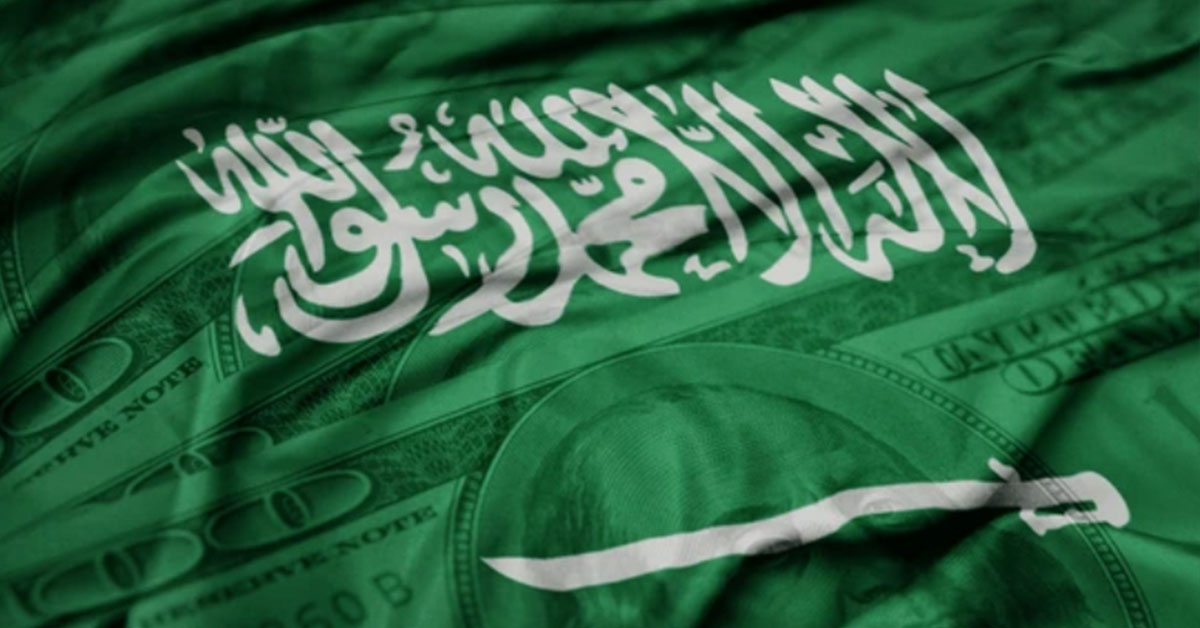
Since 1986, the Saudi riyal has been fixed at 3.75 to 1 USD. This currency board was chosen amid the 1980s inflation and oil shocks, reflecting the petrodollar era. A stable peg simplifies oil transactions and FX reserve management for Riyadh.
Following Fed policy
To defend the peg, SAMA’s interest rates closely track the US Fed. For example, Gulf banks cut rates in Dec 2024, following the Fed. Saudi Arabia’s repo rates fell in tandem, showing the peg’s influence on KSA monetary policy.
Exchange rate stability
The SAR has been remarkably stable, in the 3.75-3.76 range throughout the 2010s. This consistency reinforces foreign confidence in dollar-linked pricing.
Large USD reserves
Saudi Arabia maintains large USD reserves (around $435bn) to defend the peg.
Oil trade and currency invoicing
Today, Saudi oil is still primarily priced in dollars, but new forces like China and the petroyuan are challenging the norm.
Current USD oil pricing
Globally around 80% of oil trade remains in dollars. Saudi oil exports are still settled in USD by default, preserving the petrodollar demand.
Emerging alternatives
Saudi officials have signalled openness to non-USD payments. At the World Economic Forum in Davos 2023, KSA’s finance minister noted trade could be settled in USD, EUR or SAR. However, concrete moves to make any changes have been limited.
Petroyuan reality
Analysts have noted that yuan-based oil trade faces hurdles, with few outlets to spend RMB. S&P Global forecasts the petroyuan taking decades to scale, despite Saudi Arabia discussing oil trade in RMB. As of 2025, the dollar is still used overwhelmingly.
FX implications
As oil invoicing is forcing importers to buy large amounts of USD, therefore increasing its demand, a decision to switch to the yuan or euro would cause a seismic shift through major volumes of currency being exchanged. However, no immediate dollar exit appears to be on the horizon.
Saudi investments and dollar assets
Saudi Arabia’s massive USD-denominated asset holdings feed the strength of the dollar, whether it be reserves, treasury investments or activity with the sovereign wealth fund.
US treasury holdings
As of September 2024, Saudi Arabia held around $143.9bn in US treasuries, up 26.8bn year on year. Five consecutive months of increases show a deliberate strategy to park their surpluses in USD debt.
Diversified portfolio
Around 113.4bn of these holdings are in long-term treasuries, and around 30.5bn in bills. The Saudi Public Investment Fund also owns stakes in US companies, but the key point here is that most oil surpluses are converted into dollar assets.
Resilience to fluctuations
These large USD reserves and assets buffer Riyadh from currency shocks. The excess allows Saudi Arabia to sustain large domestic spending even if oil revenue falls, keeping confidence in holding dollars strong.
By recycling petrodollars into US treasuries and assets, Saudi Arabia deepens the link between its economy and the dollar, and keeps global demand for USD high.
Geopolitical shifts and currency alternatives
Saudi Arabia is hedging any potential risk with engagement with new blocs, as well as experimenting with new technology.
BRICS
In 2023-24, Saudi Arabia accepted an invitation to join BRICS, as well as becoming a ‘dialogue partner’ in the Shanghai Cooperation Organisation. These moves align Riyadh with China and Russia for certain deals, although it appears Saudi Arabia is keeping options open rather than deliberately engaging in de-dollarisation.
Project mBridge
In June 2024, Saudi Arabia’s central bank joined the BIS-led Project mBridge with China, HK, UAE and Thailand. The mBridge platform uses the digital yuan for cross-border payments, potentially allowing for oil transactions to be made outside the SWIFT network. Other investments in fintech and digital payment systems show a keen exploration into new technology, but so far all US and Saudi transactions remain on the SWIFT network and corresponding banks.
Future implications for FX markets
Businesses trading with Saudi Arabia can assume USD stability in the near term, but should monitor the situation with multi-currency oil invoicing. If RMB or EUR trade grows, importers may need broader hedging strategies. The mBridge CBDC platform could eventually offer faster, cheaper forex settlements, which may end up bypassing USD usage in specific corridors. However, the strong dollar peg and reserves mean Saudi importers continue to face USD pricing. Dollar strength benefits exporters globally, at the expense of making non-oil Saudi goods more expensive. Any future currency strategy shift from Saudi Arabia will show up as changes initially in FX volumes and currency pairs involving SAR, USD and CNY.
Conclusion
Saudi Arabia still underpins dollar dominance through its policies, but is making cautious steps towards alternatives. In 2024-25, the dollar remains king, thanks in part to the commitments from Saudi Arabia. The peg, dollarised oil and the large holdings of US assets keep the Saudi-US dollar relationship as a bedrock of global finance. Initiatives like CBDCs and the BRICS dialogue are symbolic first steps towards potential diversification, but most analysts agree that full de-dollarisation is a long way off. Key indicators to watch include any formal shift in oil invoicing, central bank announcements on currency policy and flows in Saudi reserves. For businesses, it is safe to continue to treat the USD as the primary vehicle currency for dealing with Saudi partners.
If you’re looking for an efficient solution to transfer currencies into various countries, take a look at our platform: CurrencyTransfer offers access to a network of
payment providers, live quotes and 5-star customer service. Sign up today.
Caleb Hinton
Caleb is a writer specialising in financial copy. He has a background in copywriting, banking, digital wallets, and SEO – and enjoys writing in his spare time too, as well as language learning, chess and investing.