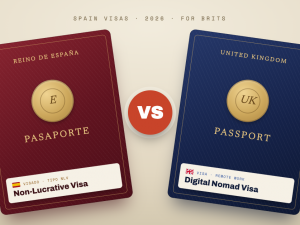
Six OECD states and at least 22 non-OECD states have established official "digital nomad" visas by 2022 - an illustration of how mainstream remote working has become post pandemic. Digital nomads inject an estimated $800 million USD each year to world economies, keeping governments alert to cross-border rules for taxes.
Get bank-beating rates — zero hidden fees
Join 10,000+ clients transferring salary, property deposits and business payments globally.


Understanding tax residency and obligations
First, determine your tax residency status. Each nation has its regulations, most often applied to the days spent or whether you maintain a permanent residence there. Many European nations tax persons who spend upwards of 183 days in-country annually. Note that the U.S. taxes its residents on worldwide earnings irrespective of where you are. American nomads are still required to file U.S. tax returns despite travel, though they may have access to exclusions or credits to lower the burden. UK nationals, on the other hand, are able to terminate tax residency by becoming non-resident using the non-domicile rules in the UK. Maintaining travel date records and determining an explicit "tax home" overseas is key to satisfying foreign residence tests (e.g., the IRS 330-day rule). In perspective, an estimated 8.7 million American citizens (non-military) reside overseas, all with varying national tax liabilities. Complying with each nation's test for residence when determining relevant treaties (social-security agreements inclusive) is vital when avoiding surprise bills.
Utilising treaties for double taxation and exclusions
Double taxation treaties let you credit taxes paid in one country against taxes owed in another, preventing the same income from being taxed twice. The Foreign Earned Income Exclusion (FEIE) is one powerful U.S. tool: qualifying Americans can exclude up to $126,500 of foreign-earned income in 2024 (rising to $130,000 for 2025). The Foreign Tax Credit (FTC) provides a dollar-for-dollar offset for foreign taxes paid on that income. By combining FEIE and FTC, many Americans end up owing little or no U.S. federal tax on foreign-earned income. Other Western countries offer similar treaty provisions to avoid double taxation. For each country in your itinerary, review the applicable tax treaty and filing forms needed to claim these benefits.

Maximising exclusions and credits for foreign income
Explore tax incentives in your host country - many nomad visas and residency programs offer initial tax breaks for foreign income. For example, some visas allow 6-12 month stays with no local income tax. Certain countries (such as Italy or Greece) have flat-rate regimes for new residents, and others (like Spain or Portugal) provide special low-tax status for foreigners. Contributing to home-country retirement accounts (such as U.S. IRAs or 401(k) plans) continues to defer U.S. tax even while abroad.
Holding savings in a stable home-currency bank account can also avoid unexpected foreign-exchange gains taxes. In short, use any legal exclusion, credit, or special regime offered by your home or host countries to minimise taxable income.
Consistent international tax filing
All expats are required to file once a year, even when no tax is owed. U.S. citizens overseas are required to file Form 1040 and frequently use Form 2555 (FEIE) or 1116 (FTC). They are also required to report foreign accounts: all U.S. individuals with over $10,000 in total foreign accounts must file a FinCEN 114 (FBAR) and may also file Form 8938 for FATCA. There has been growing IRS enforcement, with harsh penalties for non-compliance. Similar requirements exist in other countries: for instance, UK residents and Canadian residents are required to report worldwide income. Accurate records need to be kept for travel dates, incomes, and levies for foreign taxes. Many expats employ specialist international tax software or services to ensure streamlined international returns and complete compliance.
Intelligent exploitation of low-tax regimes and nomad visas
Choosing a tax-friendly base can save you a lot of money. As noted, many countries now offer nomad visas or special permits to attract remote workers. Furthermore, several Caribbean and Gulf countries impose no income tax, and some European nations (like Portugal) levy a flat low rate for new arrivals. Over 40 countries have nomad visa programs as of 2024, often allowing multi-month stays without taxing foreign-earned income. By carefully dividing your time, you can stay under each country’s 183-day residency threshold. Some nomads split the year between countries - spending part of the year in a zero-tax country and part in another - to avoid triggering full tax residency anywhere. This requires careful planning and strict tracking of days abroad, but it is a legal strategy to maximise tax efficiency.
Preparing for retirement and pensions worldwide
Long-term expat tax planning also covers strategies for retirement. Knowing how pensions and other savings are taxed by both the home country and host nation is another important step. Tax treaties often exempt foreign pension benefits, or set the tax rate at source to zero. Social Security applied abroad by the U.S. Social Security for instance, could only be taxed in the U.S. with totalisation agreements. Americans abroad may consider converting retirement accounts to Roth IRAs - you pay tax now, but future withdrawals are exempted in the U.S. (take note that some jurisdictions still tax Roth withdrawals, however). British expats also deploy QROPS or Qualifying Recognised Overseas Pension Schemes to transfer UK pensions overseas with lower potential tax. Accurate records of retirement contributions and using treaties will be worth it, with reduced double taxation down the line.
Conclusion
Tax rules are always changing, so always seek professional advice if you are unsure of any specifics. For example, one recent change included the US recently raising the FEIE and foreign housing-exclusion amounts. Periodic checks with an international tax expert allow you to access new potential savings, whilst remaining compliant. Specialists will also forewarn you of country-by-country regulations - for instance, the thresholds for foreign asset reporting or digital services taxes that impact expats. By using options such as using FEIE/FTC and exploiting the benefits of the digital nomad visa, remote workers can greatly reduce their global tax burdens. With due diligence, you will keep more of the money you make, whilst enjoying a global lifestyle.
If you’re looking for an efficient solution to transfer currencies into various countries, take a look at our platform: CurrencyTransfer offers access to a network of payment providers, live quotes and 5-star customer service. Sign-up today.
Caleb Hinton
Caleb is a writer specialising in financial copy. He has a background in copywriting, banking, digital wallets, and SEO – and enjoys writing in his spare time too, as well as language learning, chess and investing.