
Highlights
- An OBR official agrees that Reeves did not mislead the public
- Higher tariff rates are yet to be fully felt in the U.S.
- Eurozone inflation was higher than expected in November
Get bank-beating rates — zero hidden fees
Join 10,000+ clients transferring salary, property deposits and business payments globally.


A rate cut could be delayed due to persistent inflation
The Bank of England said its capital framework review showed that the benchmark for Tier 1 capital requirements for lenders, set at 14% since 2015, could be reduced by one percentage point to 13%. In its Financial Stability Report, the BoE said it would launch a review on enhancing the usability of buffers and on the implementation of the leverage ratio. These initiatives could further ease lenders' requirements.
The BoE also flagged risks to Britain's financial system had risen this year due to stretched valuations of companies investing in artificial intelligence, risky lending to big companies and some trading in government bond markets.
The comments in its half-yearly report build on warnings made in recent months by BoE Governor Andrew Bailey and other policymakers. However, it also accompanied the first reduction in capital requirements for British banks since the 2008 global financial crisis.
Investor enthusiasm for artificial intelligence had pushed share valuations in the United States to their most stretched since the dotcom bubble, and in Britain to their highest since the global financial crisis, the Central Bank estimates. "Deeper links between AI firms and credit markets, and increasing interconnections between those firms, mean that, should an asset price correction occur, losses on lending could increase financial stability risks," the BoE said.
The financial markets view the likelihood of a rate cut differently. A majority of City analysts see a rate cut on December 18th as “very possible”.
A senior official at the OBR has told a committee of MPs that he does not believe that Rachel Reeves was being misleading when she said that the state of the public finances was “very challenging” in the run-up to the Budget.
Professor David Miles believes that Reeves’s comments were not inconsistent with the situation she faced. If this were a scene from a Hollywood movie, someone would suspect that he had been “got at”.
The pound has stabilised against the euro, but it's too soon to start forecasting materially higher levels.
In fact, the pair has witnessed two consecutive weekly gains, confirming that last week's highly anticipated budget didn't have the adverse effect on sterling that many in the market were expecting. Versus the single currency, the pound made a low of 1.1360 yesterday and closed at 1.1365. Versus the dollar, the pound barely changed at 1.3211.
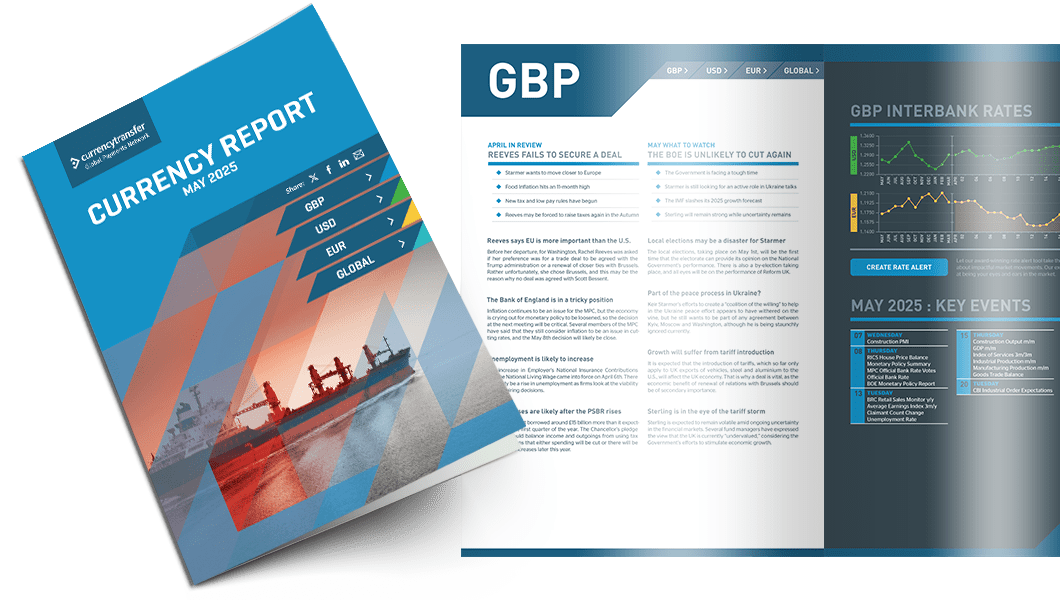
Read our latest currency report
Most impactful events planned this month and how they could impact your business
Trump has made his choice, and it looks like Hassett
QT was the Fed shrinking its balance sheet by allowing bonds to mature without replacing them. They launched it in 2022 to drain the COVID-19 pandemic’s support from the financial bloodstream. Except now reserves have dropped to the point where one more month of this virtue might crack a pipe in the funding markets.
Overall, the effects of QT are complex and can vary with the broader economic context, including inflation, employment levels, and global economic conditions. The Fed has carefully considered these factors when removing QT to achieve its dual mandate of promoting maximum employment and stable prices.
President Donald Trump said on Sunday that he has decided on his pick for the next Federal Reserve chair after making clear he expects his nominee to deliver interest-rate cuts. “I know who I am going to pick, yeah,” Trump told reporters on Air Force One on his way back to Washington, without naming his choice. “We’ll be announcing it.”
Trump has frequently insulted current Fed chief Jerome Powell for failing to lower rates swiftly, and signalled he wants a chair who will more forcefully pursue cuts.
National Economic Council Director Kevin Hassett, Trump’s chief economic adviser, is seen as the likely choice to succeed Powell.
Hassett, speaking on TV on Sunday, declined to address whether he considers himself the frontrunner to replace Fed Chair Jerome Powell and called the report a “rumour.” However, he cited positive market reaction to the news that Trump is seen as close to naming his pick, a subtle counter to concerns that investors will see him as too close to the President.
The nomination signals a push to realign the Fed and the Administration into a more cooperative partnership, with the goal of lower interest rates.
Powell has emphasised a gradual easing of policy as inflation moderates. Market reaction to the speculation suggests that Trump and the new Fed Chair will be singing from the same hymn sheet.
The dollar index maintained its downward spiral yesterday, falling for the seventh consecutive session. It fell to a low of 99.32 and closed at 99.35. Confirmation of Hassett’s nomination and the Fed decision will be the significant market-moving events this week. Both are likely to see the index retreat further.
The German economy is in its ‘deepest crisis’ of the post-war era, an industry group says
Consumer prices rose 2.2% from a year ago in November, up from 2.1% in the previous month and just ahead of the median estimate in a Bloomberg poll of economists. Core inflation, which strips out volatile food and energy costs, was unchanged at 2.4%, while closely watched services edged higher.
After a spike following the pandemic, inflation in the eurozone has fallen close to the ECB's 2% target for nine months, with underlying pressures also fading, albeit more slowly.
However, the picture is very different across member-states, driven by their varying economic fortunes and base effects. National reports showed inflation quickened in Germany, held steady in France and eased in Spain and Italy.
ECB President Christine Lagarde last week underscored the ECB’s comfort with its current monetary-policy settings, saying in a TV interview that “we’re in a good position given the inflation cycle, which we’ve managed to get under control” and that rates are “set correctly.”
Investors and economists agree. They reckon the ECB will keep its deposit rate at 2% again this month, having slashed it from a peak of 4% in a streak of eight quarter-point cuts.
December’s meeting will feature fresh economic projections, including a first glance at 2028. Previous iterations have forecast a temporary dip in inflation below 2%, likely to be exacerbated by a delay in the European Union’s new carbon-pricing system. However, several officials have cautioned against placing too much weight on that issue.
ECB Executive Board and Governing Council member Isabel Schnabel agreed with Lagarde’s take on the current situation, although she still fell back on her hawkish position. She said risks to inflation in the Eurozone remain skewed to the upside as the economy gathers momentum and governments begin spending large sums on military and infrastructure.
“My narrative is one of an economy that is recovering, with a closing output gap, expecting a significant fiscal impulse, which stimulates the economy,” said Schnabel, who’s currently seen as the most hawkish member of the Governing Council. “This leads me to the conclusion that, if anything, risks are rather tilted a little bit to the upside.”
Germany’s economy is suffering its “deepest crisis” since the aftermath of World War II, an industry group warned Tuesday, calling on Chancellor Friedrich Merz’s government to take urgent action to spark a revival.
Europe’s biggest economy “is in free fall, but the federal government is not responding decisively enough,” said Peter Leibinger, president of the Federation of German Industries (BDI). Germany is facing a perfect storm: high energy costs burdening manufacturers, weak demand for its exports in key markets, the emergence of China as an industrial rival and the U.S. tariff onslaught.
It has suffered two years of recession and is forecast to eke out only meagre growth in 2025.
The Euro continues to move higher in baby steps and looks set to challenge resistance at 1.1650 as dollar negative stories emerge in the U.S. Yesterday, the single currency reached a high of 1.1626 and closed at 1.1624.
Have a great day!

Exchange rate movements:
02 Dec - 03 Dec 2025
Click on a currency pair to set up a rate alert
Alan Hill
Alan has been involved in the FX market for more than 25 years and brings a wealth of experience to his content. His knowledge has been gained while trading through some of the most volatile periods of recent history. His commentary relies on an understanding of past events and how they will affect future market performance.