
Highlights
- Are markets right to be cautiously confident?
- Trump’s Slow-Burn Changes the US Economic Path
- The Eurozone’s unemployment rate returns to historic lows
Get bank-beating rates — zero hidden fees
Join 10,000+ clients transferring salary, property deposits and business payments globally.


UK manufacturing growth accelerates as export orders rise
Analysts expect the MPC to vote to maintain the base rate at 3.75% when it announces its decision on Thursday. The rate is already at a three-year low following four quarter-point cuts last year, which brought borrowing costs down from 5.25% since July 2024.
The expected pause follows data showing inflation climbed to 3.4% in December, moving further away from the Bank’s 2% target. While policymakers have signalled that rates are on a downward path, the latest inflation reading has strengthened the case for caution in the near term.
Markets are still pricing in two rate cuts this year, with the first potentially coming as early as March. Economists view February’s meeting as a brief pause rather than the end of the easing cycle.
The Bank will publish updated economic forecasts alongside Thursday’s decision, setting out its latest expectations for growth, inflation and unemployment. Bailey is likely to face questions about recent volatility in global financial markets, driven by erratic policy announcements and geopolitical tensions linked to Donald Trump.
In December, Bailey said he expected inflation to return close to the 2% target by April. Price growth is forecast to ease as household bills fall following measures announced by Rachel Reeves, including the removal of some green levies and a freeze on rail fares.
However, wages, especially in the services sector, are still rising, which will pressure inflation. However, rising unemployment may turn the tide and bring average wage growth closer to the rate of inflation.
For now, economists believe the Bank will opt for patience, balancing early signs of cooling inflation against lingering price pressures and global economic uncertainty.
There is a strong feeling of confidence that the Government may soon begin to reap a harvest from the seeds it has sown over the past eighteen months or so. The Prime Minister and Chancellor told voters that it would take time to put right the calamitous state of the economy they inherited, and they stand by those words.
Have the tax increases that have come close to decimating the hospitality sector and driven farmers and pensioners to the brink of open revolt killed off any chance of economic growth beyond the mediocre?
Rachel Reeves told reporters more than a year ago that the Cabinet's priority was to encourage growth, but there have been precious few examples of that policy in practice.
The pound continued to retrace its steps yesterday as the dollar continued to recover. A pattern is forming on daily charts that suggests that 1.3820 could be the top of the most recent move.
Yesterday, it fell to a low of 1.3623 and closed at 1.3666.
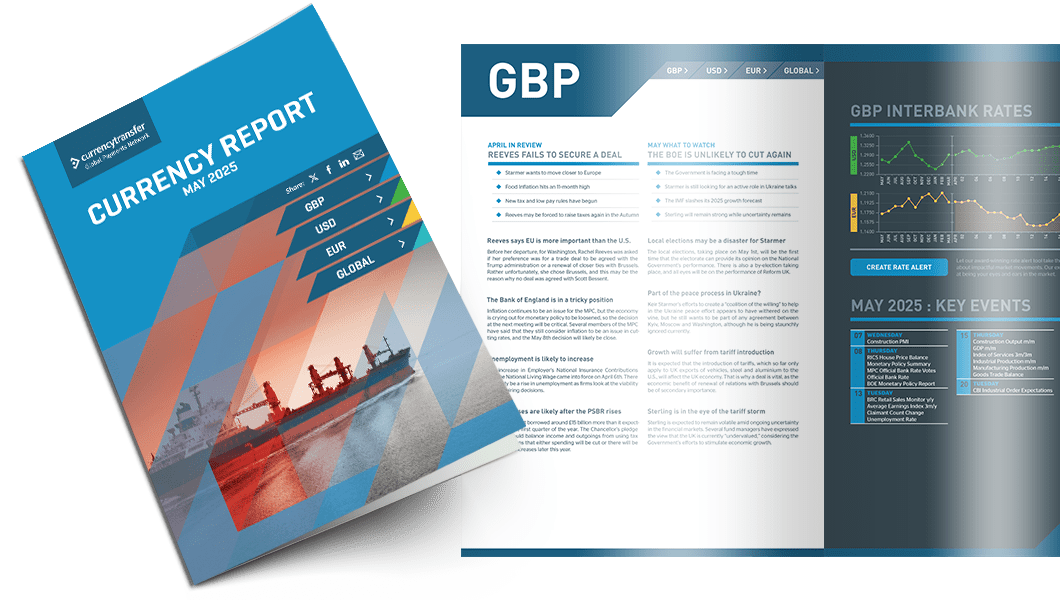
Read our latest currency report
Most impactful events planned this month and how they could impact your business
Bostic: I don’t know Kevin Warsh, but I wish him the best
Hassett, a one-time favourite for the Fed Chairman nomination, was scathing in his criticism of Powell. This continues Trump’s rhetoric about the possibility that Powell will remain a Fed Governor when his term as Chairman ends this May.
If that were to happen, it is unclear whether Powell's character would allow him to be an outspoken critic of the economic policies that have led the Central Bank to remain cautious about cutting interest rates.
Hassett argued that the Fed should focus on keeping interest rates and unemployment low and "getting the balance sheet as lean as possible," and that it should do it "the old-fashioned way, quietly."
He claimed the Fed was "forthcoming" with the DOJ's investigation into whether Powell was truthful during congressional testimony regarding the cost and scope of renovations to the Fed's two main buildings on the National Mall, which have overrun their expected budget and are projected to cost $2.5 billion. Powell has denied any wrongdoing.
Although the investigation is formally unrelated to Powell’s responsibilities as Fed chair, a bipartisan group of lawmakers has interpreted the probe as a way for Trump to pressure Powell to cut interest rates, a move Powell has resisted. He believes making that call at the President’s request would jeopardise the Fed’s independence.
Throughout the first year of Donald Trump’s second term, the consistent theme has been to move fast and break the global order. This has been the guiding principle, an economic blitzkrieg, the chosen method.
Yet all the short-attention-span policymaking hasn’t necessarily been matched by the speed of the effects. In fact, if you’re measuring the actual economic impact rather than the rhetoric, this is a slow-burning presidency, although some long-term trends are accelerating.
The largest and most lasting economic effects of the Trump Presidency are materialising a bit like a chronic disease. In an attention-driven economy in which shock-and-awe social media-friendly crises are the staple diet, that’s a terrible thing for anybody pushing back.
Following the crackdown on immigration, which has caused serious debate, a potentially larger debate over the effects of Trump’s policies on the national population is, so far, limited to a few Washington academics. The US is now flirting with its first population decline since national censuses began in 1790. That’s a stark acceleration of a moment demographers hadn’t expected to occur for decades.
Other forces, such as the current investment boom in data centres and other AI-related infrastructure, may mask the short-term economic effects of a single population decline event.
NVIDIA’s share price is unlikely to take a hit on the news. A new administration might loosen the immigration restrictions that Trump continues to roll out and put the US population back on a growth track.
The Atlanta Fed President, Raphael Bostic, was the “first of the twelve” to welcome Trump’s nominee for Chair of the Federal Reserve. Bostic describes the “very large job” of the Federal Reserve chair and wished Kevin Warsh well after President Donald Trump nominated him to succeed Jerome Powell as Fed chair. Bostic speaks to the Rotary Club of Atlanta.
It's a huge undertaking for Warsh. I wish him the best. He's got a tall task. We are not through with inflation from tariffs. It is premature to say the job is done.
The dollar index filled the gap created on the daily charts last week. It rallied to a high of 97.71 and closed at 96.66.
Euro area firms face rising borrowing costs
Against the backdrop of renewed transatlantic tensions over trade and the Trump administration’s desire for Greenland, this is a timely and necessary challenge for European leaders.
But as the EU looks to bolster its self-sufficiency, it is also worth asking: Where does Europe already outperform the United States and China? The answer is neither military power, where fragmentation remains a constraint, nor capital markets, which remain comparatively underdeveloped. But to stop there would be premature.
Too often, Europe is assessed through a narrow macroeconomic lens: economic growth rates, fiscal fragmentation, or the perceived slowness of political decision-making.
On these metrics, Europe tends to fare worse than the United States or China. Europe is not built for speed or scale. Rather, it is built on a dense export base, technological depth, institutional stability, and economic diversity. As French President Emmanuel Macron put it, “Having a place like Europe, which sometimes is too slow, for sure, and needs to be reformed, for sure, but which is predictable, loyal, and where you know that the rule of the game is the rule of law, is a good place.”
Euro area firms reported higher interest rates and other borrowing costs in the final quarter of 2025.
Interest rates on bank loans rose on balance, with 12% of firms reporting an increase, up from 2% in the previous quarter, according to the European Central Bank’s latest Survey.
28% of firms also reported higher non-interest financing costs such as charges, fees and commissions, up from 23%, the ECB reported.
Collateral requirements, assets pledged to secure a loan, were also reported to be higher, with 14% of firms seeing an increase, although16% saw an increase in the third quarter of 2025.
Firms’ applications for bank loans rose modestly, with a net 3% reporting higher demand compared with a flat reading previously. At the same time, availability fell slightly to net -2% from net -1% in the previous quarter, the ECB said.
That pushed the bank loan “financing gap”, an index measuring the difference between need and availability, up to net 3% from net 1%.
European growth continues to be led by the peripheral countries. Spain and Portugal are maintaining growth rates of around 2.5%, and Ireland is approaching 4.0%.
France and Germany, despite gaining some momentum, remain below the European average. France managed to grow by 1.1%, up from 0.9%, and Germany consolidated at around 0.4%, after closing 2024 and 2023 in contraction.
The surprise came on the unemployment front. It returned to historic lows around 6.2%m in December. A solid labour market and low inflation, averaging 1.9% in December, provide further reasons for the ECB to maintain its stable monetary policy.
The single currency fell back yesterday and closed the gap that had formed over the weekend between 23 and 26 January. It fell to a low of 1.1776 and closed at 1.1791.
Have a great day!

Exchange rate movements:
02 Feb - 03 Feb 2026
Click on a currency pair to set up a rate alert
Alan Hill
Alan has been involved in the FX market for more than 25 years and brings a wealth of experience to his content. His knowledge has been gained while trading through some of the most volatile periods of recent history. His commentary relies on an understanding of past events and how they will affect future market performance.