Highlights
- CBI boss calls for action, not more promises
- NVIDIA reinstates Jensen Huang after Trump push
- Eurozone business activity still growing despite French downturn
Get bank-beating rates — zero hidden fees
Join 10,000+ clients transferring salary, property deposits and business payments globally.

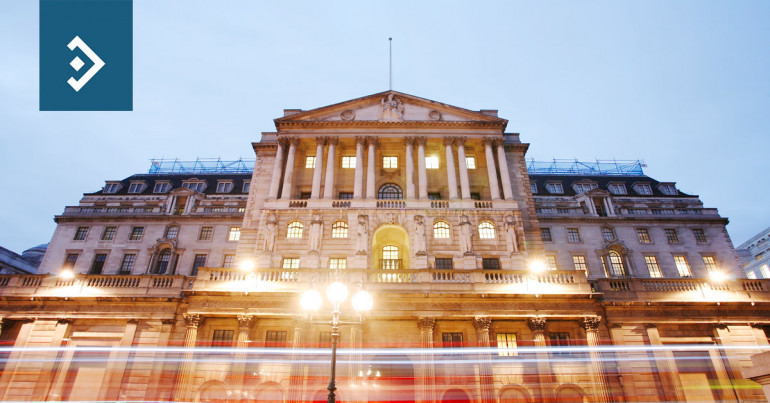
The BoE’s credibility is at stake
She argued that while recent government rhetoric has been positive, businesses now need clear decisions and practical policies, not another decade of promises.
Newton-Smith stressed that the UK can only escape the combination of high taxes and weak growth by encouraging private-sector investment. She called for the government’s forthcoming 10-year economic plan and Spending Review to include detailed commitments on key issues, including reducing industrial energy costs, supporting job creation through lower employment costs, and ensuring private capital continues to play a central role in infrastructure investment.
The CBI chief argued that long-term investment requires long-term policy stability, warning that frequent changes in direction deter investors. At the same time, she highlighted opportunities presented by artificial intelligence, regional devolution and improved trade relations with the European Union. According to Newton-Smith, restoring confidence and creating a predictable investment environment are essential if the UK is to achieve stronger productivity, higher living standards and sustained economic growth.
Bank of England Chief Economist Huw Pill has reinforced the case for maintaining a firm monetary policy stance, warning that policymakers must act to preserve price stability and ensure inflation returns sustainably to the Bank’s 2% target. Speaking at a conference in Vienna, Pill said action is needed now to maintain public confidence that inflation will be brought under control over the medium term.
His comments come as UK inflation remains above target and concerns persist that higher energy costs could feed into broader price pressures. Pill stressed that the Bank cannot take its credibility for granted, noting that inflation has been below target in only three of the past 62 months. This highlights the challenge facing policymakers as they seek to anchor inflation expectations and prevent temporary price shocks from becoming embedded in wage and pricing behaviour.
The remarks suggest ongoing vigilance from the Monetary Policy Committee despite signs that previous rate increases are continuing to work through the economy. Earlier this month, the MPC raised Bank Rate to 4%, with the Bank’s Governor, Andrew Bailey, emphasising that policy is not on a pre-set path and that further action would depend on incoming data. Pill’s latest comments indicate that the Bank remains focused on safeguarding its anti-inflation credentials and ensuring that price stability is restored on a lasting basis.
Clear evidence shows that inflation has been more persistent than the Bank of England would like. However, economists generally distinguish between persistent inflation and embedded price rises. Inflation becomes embedded when households, businesses and workers come to expect high inflation to continue, prompting behaviour that perpetuates it. Workers demand higher wages to compensate for expected price rises, firms pass those costs on through higher prices, and inflation becomes self-sustaining.
Some evidence suggests the UK has experienced elements of this process in recent years. Wage growth has remained relatively strong, and services inflation has stayed elevated, even as some of the original energy and supply-chain shocks have faded. At the same time, headline inflation has often been driven by factors outside the Bank's control, including energy prices and global commodity costs. The Bank's own November assessment noted that there remains only limited evidence that higher energy costs are creating widespread knock-on effects across the economy.
Therefore, Pill's comments should be interpreted less as an admission that inflation is fully embedded and more as a warning that it could become embedded if policymakers relax too soon. His emphasis on preserving the Bank's credibility suggests concern that inflation expectations remain vulnerable and that monetary policy may need to stay restrictive until there is clearer evidence that price pressures are returning sustainably to target.
Sterling came under broad pressure yesterday, extending its recent decline as investors favoured the US dollar and reassessed the outlook for UK interest rates. The pound fell to around 1.30 against the dollar, closing near its lowest level since early 2025 after losing roughly 0.4%-0.5% during the session.
Renewed dollar strength was the main driver. Growing optimism about the US economic outlook, together with expectations that the Federal Reserve may need to keep monetary policy restrictive, supported demand for the greenback across currency markets. At the same time, traders remained cautious about sterling following recent UK inflation and growth data, which have led markets to question how much further the Bank of England will tighten policy.

The US Dollar Breakout Has History on Its Side
Recent economic data point to an economy that remains remarkably resilient. Labour market conditions, while softening somewhat, continue to support household spending, and underlying services inflation remains stubbornly elevated. Financial markets have also eased broader monetary conditions by pricing in future policy accommodation, thereby reducing some of the restrictive effect of previous rate increases.
History suggests that inflation can be difficult to eradicate once expectations begin to adjust upwards, making the final stage of disinflation far more challenging. The 1970s experience demonstrated the costs of easing policy prematurely.
For that reason, Fed Chairman Kevin Warsh must remain focused on restoring price stability. While overtightening carries risks, failing to maintain sufficient pressure on inflation could ultimately necessitate even more aggressive action later. A cautious Fed may appear prudent today, but excessive hesitation could prolong inflation and increase the economic costs of bringing it back under control. This fact is not wasted on a majority of FOMC members.
The US dollar's latest advance may still have room to run if historical patterns are any guide. After breaking above key technical and psychological levels against many major currencies, the greenback is once again benefiting from resilient US economic growth, relatively high interest rates, and its traditional role as the world's premier haven.
History shows that sustained dollar rallies often gather momentum once established. In previous cycles, including the late 1990s and the period between 2014 and 2016, a widening gap between US economic performance and that of other major economies encouraged global capital flows into dollar-denominated assets. Today's environment shares some of those characteristics, with the US economy continuing to outperform many of its developed-market peers.
The dollar is also supported by expectations that the Federal Reserve will keep monetary policy restrictive longer than many other central banks, despite President Trump’s continued demands that rates be cut to the ‘lowest in the world.’
Even as inflation gradually eases, policymakers remain wary of declaring victory too soon, helping to maintain an attractive yield advantage for US assets.
Meanwhile, growth concerns in Europe, policy uncertainty in the United Kingdom, and signs of slowing activity in parts of Asia have reinforced demand for the greenback. While currency markets rarely move in a straight line, the historical record suggests that once a dollar breakout gains traction, it can persist for far longer than many investors initially expect.
Jensen Huang's return as Chief Executive of NVIDIA capped a dramatic week for the world's most valuable technology company. The board voted unanimously to reinstate its co-founder after concluding he remains the best person to lead the company through the next phase of the artificial intelligence revolution. NVIDIA said the decision followed discussions with Huang and input from senior levels of the US government, which helped reassure directors that his return posed no national security risk.
A notable aspect of the episode was President Trump's apparent intervention. According to Reuters and other reports, Trump's administration supported Huang's return, while Trump himself publicly stated that Huang posed no national security threat. Reports indicate that administration officials engaged with NVIDIA's board during the process, helping pave the way for the dramatic U-turn that restored Huang to the top job.
Investors responded enthusiastically, sending NVIDIA shares sharply higher as markets welcomed the return of the executive widely credited with transforming the company into the dominant force behind the global AI boom. The episode underlines both Huang's importance to NVIDIA and the strategic significance the company now holds for the United States' technological and economic ambitions.
Overall, the dollar index recorded another positive session yesterday, supported by a mix of relative US economic strength, expectations of prolonged monetary restraint from the Federal Reserve, and continued demand for safe-haven assets. The move reinforced the greenback's standing as one of the strongest-performing major currencies in recent weeks.
France and Germany set to take key ECB roles
France has become a source of concern for policymakers and investors alike. Slower domestic demand, political uncertainty and lingering fiscal concerns have weighed on business confidence and economic activity. However, the broader Eurozone has so far avoided a more widespread downturn, reflecting the increasingly diverse nature of growth across the bloc.
Much of the resilience has come from stronger performances elsewhere, particularly in sectors linked to technology, services and investment. Improving financial market conditions and easing concerns over sovereign debt have also supported sentiment. As a result, businesses across much of the Eurozone continue to report rising activity, albeit at a modest pace.
For the European Central Bank, the figures provide evidence that higher interest rates have not derailed economic growth. At the same time, the uneven expansion highlights the challenges facing policymakers, who must balance inflation risks against signs of weakness in key economies.
Overall, the data suggest that while French economic difficulties remain a headwind, the wider Eurozone economy retains enough momentum to continue growing, supporting expectations of steady, if unspectacular, expansion into 2027.
The European Central Bank's evolving leadership structure is increasingly skewed towards the Eurozone's largest economies, with France and Germany poised to hold some of the institution's most influential positions. This development reflects the growing political weight of the bloc's two largest members but is also generating concerns among smaller Eurozone countries about the balance of representation within the ECB's decision-making framework.
Historically, the ECB has sought to balance national interests while maintaining its independence. However, recent appointments and succession discussions have raised questions about whether that balance is shifting. With France and Germany seeking greater influence over the ECB's Executive Board and other senior positions, critics argue that smaller member states may find it harder to ensure their economic circumstances are fully reflected in policy discussions.
These concerns will intensify after Philip Lane's departure. His tenure as ECB Chief Economist has given one of the Eurozone's smaller economies a significant voice. Lane was widely regarded as an influential architect of the ECB's response to the pandemic and the subsequent inflation surge. His exit will leave fewer representatives from smaller member states in the ECB's top policymaking ranks.
While all members of the Governing Council formally have an equal mandate to pursue price stability, the concentration of senior positions among representatives from the largest economies risks creating a perception that policymaking is increasingly dominated by the interests of France and Germany. Such perceptions could complicate efforts to maintain consensus across a diverse monetary union, particularly during periods of economic divergence between core and peripheral economies.
Yesterday, the euro underperformed against the dollar but was relatively stable against several other major currencies. Market attention remains focused on the diverging policy outlooks of the Federal Reserve and the European Central Bank, with stronger US growth and higher yields continuing to give the dollar an advantage over the single currency.
Have a great day!

Exchange rate movements:
23 Nov - 24 Nov 2026
Click on a currency pair to set up a rate alert
Alan Hill
Alan has been involved in the FX market for more than 25 years and brings a wealth of experience to his content. His knowledge has been gained while trading through some of the most volatile periods of recent history. His commentary relies on an understanding of past events and how they will affect future market performance.