Highlights
- How well is the economy positioned to benefit from AI?
- An ‘irrelevant’ Trump is a danger to the global economy
- The EU Commission warns of high borrowing costs as deficits rise
Get bank-beating rates — zero hidden fees
Join 10,000+ clients transferring salary, property deposits and business payments globally.

Does Burnham understand the EU?
While the protests have not yet reached ‘Luddite’ proportions, they provide a worrying backdrop to the country’s plans to move forward with what is expected to be the next great innovation.
Artificial intelligence is rapidly emerging as one of the most significant drivers of economic growth since the internet's advent. The economy appears well positioned to benefit from AI, thanks to strong levels of investment, widespread digital infrastructure, and growing adoption across industries. Businesses increasingly use AI to automate routine tasks, improve decision-making, and boost productivity, allowing workers to focus on higher-value activities.
The technology's potential extends far beyond the technology sector. Manufacturers are employing AI to optimise production processes, healthcare providers are using it to improve diagnostics and patient outcomes, and financial institutions are deploying advanced algorithms to manage risk and detect fraud. These developments can boost efficiency and lower costs across the economy.
However, the benefits are unlikely to be evenly distributed. Regions and sectors with highly skilled workforces and access to digital resources are expected to gain the most, while low-skilled occupations may face disruption. This creates a need for greater investment in education, retraining, and digital skills to ensure workers can adapt to changing labour market demands.
Overall, the economy is well positioned to capitalise on AI's opportunities. With appropriate infrastructure, regulation, and workforce development, AI could significantly boost productivity, raise living standards, and support stronger long-term economic growth.
Bank of England rate-setter Megan Greene said yesterday that the UK needs to raise interest rates faster if conflict in the Middle East continues, expressing doubt that a lasting peace agreement is close or even likely.
Speaking at a roundtable in London, Greene warned that the BOE is "a little bit behind the curve now." The central bank raised rates for the first time in three years earlier this month, but Greene, one of its most hawkish officials, has been voting for a hike since June.
"I think it's appropriate to tighten policy further unless there's a miraculous turnaround in data or in the war," she said.
Greene said her concern focuses more on the price of refined products than on crude oil itself. Energy bills in the UK are expected to jump another 26% in January. Petrol and diesel prices have eased but remain historically high.
"You would need to see a lasting, credible diplomatic solution that would end the war, and I'm putting that probability incredibly low. But it's not a zero, I suppose. That is something that might make me think that further tightening wasn't warranted," she said.
The BOE will discuss the base rate again at its next meeting on December 17, with markets currently pricing in roughly an 80% chance of a quarter-point increase.
The EU that the Prime Minister cannot help but ‘flirt’ with is a vastly different animal from the one the UK voted to leave ten years ago.
While it has improved over the past decade, it has also had ten more years to address the issues that have plagued it since it took on its most recent form, yet has made little progress.
Decision-making processes remain incredibly convoluted, while individual state borrowing is again rising and may reach worryingly high levels in the next 2/3 years.
Germany, despite the recent upturn in activity, is still an economy struggling to come to terms with its past and the ‘new’ global economy, while France's problems are nothing new.
As a trading partner, the EU is a powerful ally, but in many other respects the UK would still be better served by forging its own path.
Looking at Canada under Mark Carney, it is clear that having a large economy ‘on the doorstep’ does not always deliver the benefits proximity suggests.
Andy Burnham says he is fairly agnostic about any future expansion of the relationship, and this is fair comment, since further discussions may well be warranted. But the Government needs to go into any new relationship with its eyes open, since Brussels will undoubtedly extract its pound of ‘flesh’ from any new deal.
The pound performed strongly in global foreign exchange markets yesterday, recovering from the previous session's weakness and posting broad gains against the US dollar. Sterling rose from around $1.3030 to close near $1.3120, up roughly 0.7% on the day.
The move marked a notable rebound after the pound had fallen to its lowest level of the year against the dollar on 23 November. Improved risk appetite and some profit-taking on long US dollar positions appeared to support sterling, allowing it to recover a portion of its recent losses.
Against the broader market, the pound's advance was driven primarily by dollar weakness rather than any major UK-specific development. Nevertheless, the recovery eased concerns that emerged after sterling's sharp decline earlier in the month. By the close of trading, GBP/USD had reached its highest level in several sessions.

Set up a bookable rate alert
Automatically execute a currency purchase when your desired rate is reached
NY Fed’s Williams says more action is needed to bring inflation down
The midterm elections have significantly weakened the President’s ability to use his ‘personality’ to persuade Congress. The arrival of Trump nominee Kevin Warsh at the Federal Reserve has also backfired spectacularly.
If investors conclude that a US administration lacks the political influence to implement its economic agenda, markets could face prolonged uncertainty over taxation, trade policy, government spending and international relations. Businesses may delay investment decisions while they wait for clarity, slowing economic activity both in the United States and abroad.
An increasingly marginalised President could also heighten geopolitical risks. Allies and trading partners may become less willing to negotiate long-term agreements if they doubt Washington's ability to deliver on commitments. Such uncertainty could weaken global trade flows, reduce cross-border investment and encourage other major economies to pursue more fragmented economic strategies.
At the same time, financial markets could become more sensitive to policy disputes between the White House, Congress and the Federal Reserve. Frequent political conflicts may generate volatility in equity, bond and currency markets, raising borrowing costs and undermining business confidence.
The danger to the global economy may therefore lie not only in controversial policies themselves, but in the uncertainty created when the world's largest economy appears unable to provide clear and consistent leadership. Stability remains one of the most valuable economic assets any administration can offer.
Concerns about a potential US recession have returned to financial markets as investors assess signs of slowing economic momentum. While the economy has proved remarkably resilient in recent years, some indicators are raising questions about the sustainability of growth heading into 2027.
This may be one of the ‘feast or famine' scenarios that often leak into markets after such a momentous upheaval as was seen a few weeks ago, but several economists are looking towards a significant slowdown in the economy, especially as the FOMC takes on a more hawkish stance.
Higher interest rates continue to weigh on interest-sensitive sectors such as housing and business investment, while consumer spending, long the backbone of the American economy, is showing signs of moderation. At the same time, businesses have become more cautious about hiring, reflecting uncertainty over future demand and borrowing costs.
Recession concerns are also rising, with softer manufacturing surveys and signs that credit conditions remain restrictive. Although inflation has eased from its previous peaks, price pressures have not disappeared entirely, limiting policymakers' scope to provide immediate support through lower interest rates.
However, recession risks should not be overstated. Employment remains relatively strong, household balance sheets are generally healthy, and investment linked to artificial intelligence continues to support the economy. The coming months will therefore determine whether the economy experiences a mild slowdown or slips into a broader, if shallow, recession. The bursting of the AI ‘bubble’ may also drive a significant downturn.
John Williams, the president of the New York Federal Reserve, is one of the most influential voices on the FOMC. Yesterday, he continued his hawkish rhetoric in a speech, telling his audience that further action may be necessary to bring inflation back towards the Fed’s 2% target.
Williams attributed inflation in part to the conflict in Iran and to rising demand linked to artificial intelligence infrastructure investments. He said tariffs have largely stopped adding to inflationary pressure.
His remarks come ahead of the Federal Open Market Committee’s December 8-9
Consumer confidence rose for the second straight month in November, reaching its highest level since January 2025. The indicator, calculated by the analytical centre The Conference Board, increased by 11.4 points, from a revised 91.9 points in October to 103.3 points. This significantly exceeded economists’ expectations, which had projected around 92 points.
The present situation index rose by 13.7 points to 132.8. The share of respondents who believe jobs are plentiful increased from 26.2% to 30.8%. At the same time, the share of those who said jobs are hard to get declined from 21.4% to 18.4%.
The expectations index, which reflects households’ assessments of income, business conditions and employment over the next six months, rose by 9.9 points to 83.6. The share of consumers expecting the number of jobs to decline in the coming months fell from 25.7% to 19.3%.
While this may reflect the ‘euphoria’ following the midterm elections, it could also raise concerns for the Fed if it bleeds through into increased demand, which is unlikely to drive any fall in inflation.
The US dollar index weakened modestly yesterday, retreating from the YTD highs reached in the previous session. The index closed near 103.85, down about 0.45% from 104.32 on Monday, as investors took profits after a strong rally that had lifted the greenback to its year-high.
A December rate hike may not fully contain inflation
In November, the IFO index stood at 90.6, up from 90.2 in October, and is now at its highest level in more than three years. Both the current assessment and the expectations component have improved. The latest drop in energy prices and interest rates appears to be fuelling almost unbreakable confidence.
Things have grown a bit quieter on the economic front in Germany. After years of collective depressions, the delight at this surprise resilience has been a welcome change. However, the German economy now seems to have entered a new period of paralysing calm: not bad enough to trigger a new outcry, but not good enough to justify outright enthusiasm. The reverse-Goldilocks. Not too hot, not too cold, also not quite right.
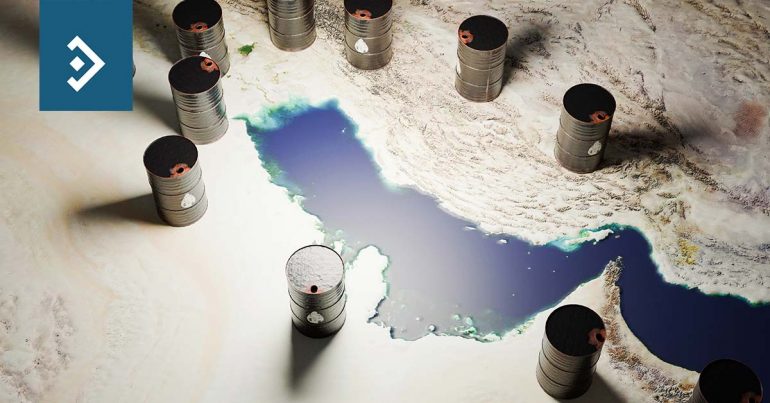
The economy is on track for its best growth year since the pandemic ended. Fiscal stimulus and the fact that other nations were hit harder by the closure of the Strait of Hormuz have driven Germany's resilience.
Fiscal stimulus, however, remains controversial. In the first nine months of the year, only around 50% of the planned investments from the special purpose vehicle for infrastructure had been spent.
To some, this clearly illustrates the inefficiency of German bureaucracy or the result of creative accounting and repurposing expenditures to other areas. To others, it simply illustrates the lag with which fiscal stimulus has reached the economy.
The former would be cause for severe concern; the latter a reason for hope, as the impact of fiscal stimulus would gain momentum over the coming months. As is so often the case, the truth is somewhere in the middle.
The European Commission has warned that rising budget deficits across several member states could lead to persistently high borrowing costs, creating fresh challenges for governments already grappling with weak economic growth. As public spending rises and debt levels climb, investors are demanding higher yields to compensate for the perceived risks of lending to heavily indebted countries.
Higher borrowing costs further strain public finances, as governments must devote a larger share of revenue to debt servicing rather than investment or public services. This is particularly concerning as many countries seek to fund defence spending, infrastructure projects, and the green transition.
The Commission has therefore stressed the importance of credible fiscal policies and sustainable budget plans. Failure to control deficits could undermine market confidence and widen borrowing spreads between stronger and weaker Eurozone members.
While GDP growth may help ease debt burdens over time, policymakers face a difficult balancing act. They must support their economies while ensuring that public debt remains manageable in an environment where interest rates are likely to remain higher than in the past decade.
A December rate increase may not fully contain inflation. However, a further move is not urgent because second-round effects are building only gradually, Lithuanian Central Bank Governor Gediminas Simkus said, according to Reuters.
The ECB has lifted interest rates twice this year as high energy costs pushed inflation well above its 2% target. A third increase on Dec 17 is widely expected, leaving policymakers and ECB watchers debating the path beyond that point, when a new ECB president succeeds Christine Lagarde.
Simkus told Reuters he was not convinced that a 25-basis-point increase in December would be sufficient to bring inflation fully under control, adding that the scale of any additional action would depend heavily on the outcome of wage negotiations.
Wage growth has been surprisingly modest this year, but the ECB's own wage tracker has begun to edge up slightly as inflation reached 4% and energy prices stayed high for longer than many had predicted.
While some economists argue the labour market is softer than in recent years, preventing high inflation from feeding into wages, Simkus cautioned that unemployment remains historically quite low and that it was only natural for unions to seek compensation for lost real incomes. Financial markets now treat the December increase as a done deal and expect one or two rate increases in 2027, with the first of these fully priced in only by June.
Yesterday, the single currency enjoyed a firmer session, regaining some of the losses seen earlier in the month as the US dollar consolidated after reaching its strongest levels of 2026.
Have a great day!

Exchange rate movements:
24 Nov - 25 Nov 2026
Click on a currency pair to set up a rate alert
Alan Hill
Alan has been involved in the FX market for more than 25 years and brings a wealth of experience to his content. His knowledge has been gained while trading through some of the most volatile periods of recent history. His commentary relies on an understanding of past events and how they will affect future market performance.